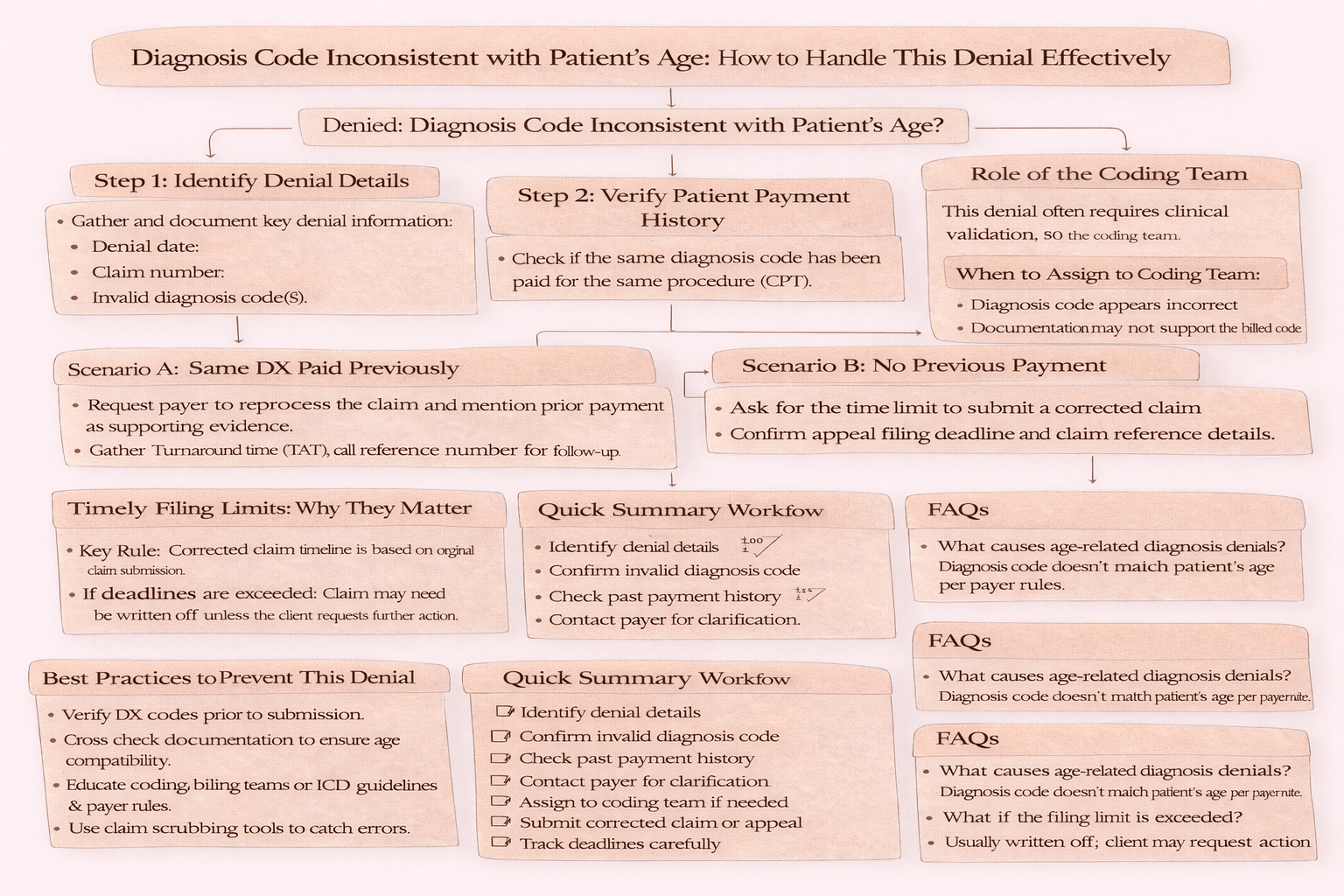
Medical billing denials are a common challenge in revenue cycle management, and one frequent issue is when a claim is denied because the diagnosis code (DX) is inconsistent with the patient’s age. This type of denial can delay reimbursements and increase administrative workload if not handled properly. In this article, we’ll break down what this denial means, why it happens, and how to resolve it efficiently using a structured approach.
Insurance companies use strict validation rules to ensure that diagnosis codes match patient demographics such as age and gender. When a mismatch occurs for example, a pediatric diagnosis billed for an elderly patient the claim gets rejected or denied. Understanding how to investigate and resolve this denial is crucial for medical billers, coders, and revenue cycle professionals to maintain cash flow and reduce claim rework.
What Does “Diagnosis Inconsistent with Patient’s Age” Mean?
This denial occurs when the diagnosis code submitted on a claim does not align with the patient’s age according to payer guidelines.
Example:
A diagnosis code for newborn conditions billed for a 45-year-old patient
A geriatric condition assigned to a child
Insurance systems automatically flag such inconsistencies, resulting in denial.
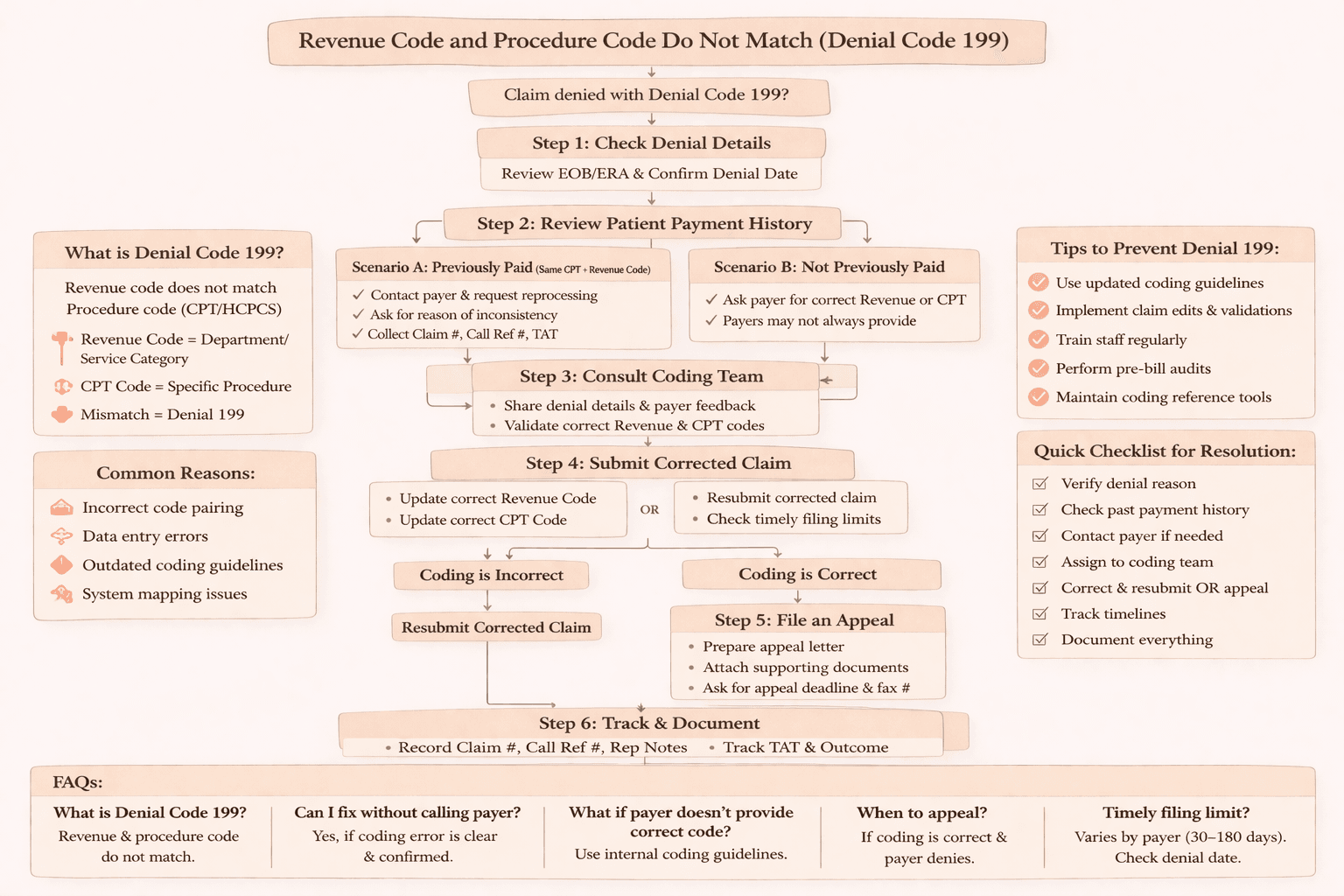
Step-by-Step Process to Handle the Denial
Here’s a structured workflow you can follow when encountering this denial.
1. Identify the Denial Details
Start by gathering key information: Denial date, Claim number, Invalid diagnosis code(s). If multiple diagnosis codes are present, confirm which specific code triggered the denial.
2. Verify Patient Payment History
Check whether the same diagnosis code has previously been paid for the same procedure (CPT).
Scenario A: Same DX Paid Previously
If yes: Request the payer to reprocess the claim and mention prior payment as supporting evidence. Follow up with Turnaround Time (TAT) for reprocessing and call reference number for tracking.
Scenario B: No Previous Payment
If the diagnosis has not been paid before: Ask for the time limit to submit a corrected claim and request the fax number or mailing address for appeals. Also confirm appeal filing deadline and claim reference details.
Role of the Coding Team
This denial often requires clinical validation, so the coding team plays a critical role.
When to Assign to Coding Team:
Diagnosis code appears incorrect
Documentation may not support the billed code
Possible Outcomes:
1. Coding Team Provides Corrected DX Code
Update the claim with the correct diagnosis and submit a corrected claim if within filing limit.
2. Coding Team Confirms DX Code is Correct
Proceed with an appeal to the insurance company.
Timely Filing Limits: Why They Matter
Every payer has strict deadlines for corrected claims and appeals.
Key Rule:
Corrected claim timeline is based on original claim submission
Appeal timeline is based on denial date
If deadlines are exceeded: Claim may need to be written off unless the client requests further action.
Special Scenarios to Consider
In real-world billing, exceptions often occur. Some clients may request submission even after time limits and appeals may still be filed despite expired deadlines. Always follow client-specific instructions and policies.
Best Practices to Prevent This Denial
Validate diagnosis codes before submission using coding tools or scrubbers and ensure age-specific compatibility.
Cross-check documentation to verify physician notes align with diagnosis.
Educate coding and billing teams with regular training on ICD guidelines and payer-specific rules.
Use claim scrubbing software to detect errors before claim submission.
Quick Summary Workflow
Identify denial details
Confirm invalid diagnosis code
Check past payment history
Contact payer for clarification
Assign to coding team if needed
Submit corrected claim or appeal
Track timelines carefully
Frequently Asked Questions (FAQs)
1. What causes age-related diagnosis denials?
These denials occur when the diagnosis code does not match the patient’s age based on payer rules or ICD guidelines.
2. Can I resubmit the claim with the same diagnosis code?
Only if the coding team confirms it is correct, otherwise a corrected diagnosis must be used.
3. What is the difference between a corrected claim and an appeal?
Corrected claim fixes errors like wrong diagnosis, while an appeal challenges the payer’s denial decision.
4. How is the appeal timeline calculated?
Appeal deadlines are usually calculated from the denial date, not the original submission date.
5. What if the timely filing limit is exceeded?
Typically, the claim is written off unless the client requests further action or exceptions apply.
Conclusion
Handling a denial for “diagnosis inconsistent with patient’s age” requires a methodical approach involving verification, communication, and collaboration with the coding team. By understanding payer requirements and maintaining accurate documentation, you can significantly reduce such denials. A proactive strategy combined with proper training and validation tools can help ensure cleaner claims, faster reimbursements, and a more efficient revenue cycle.