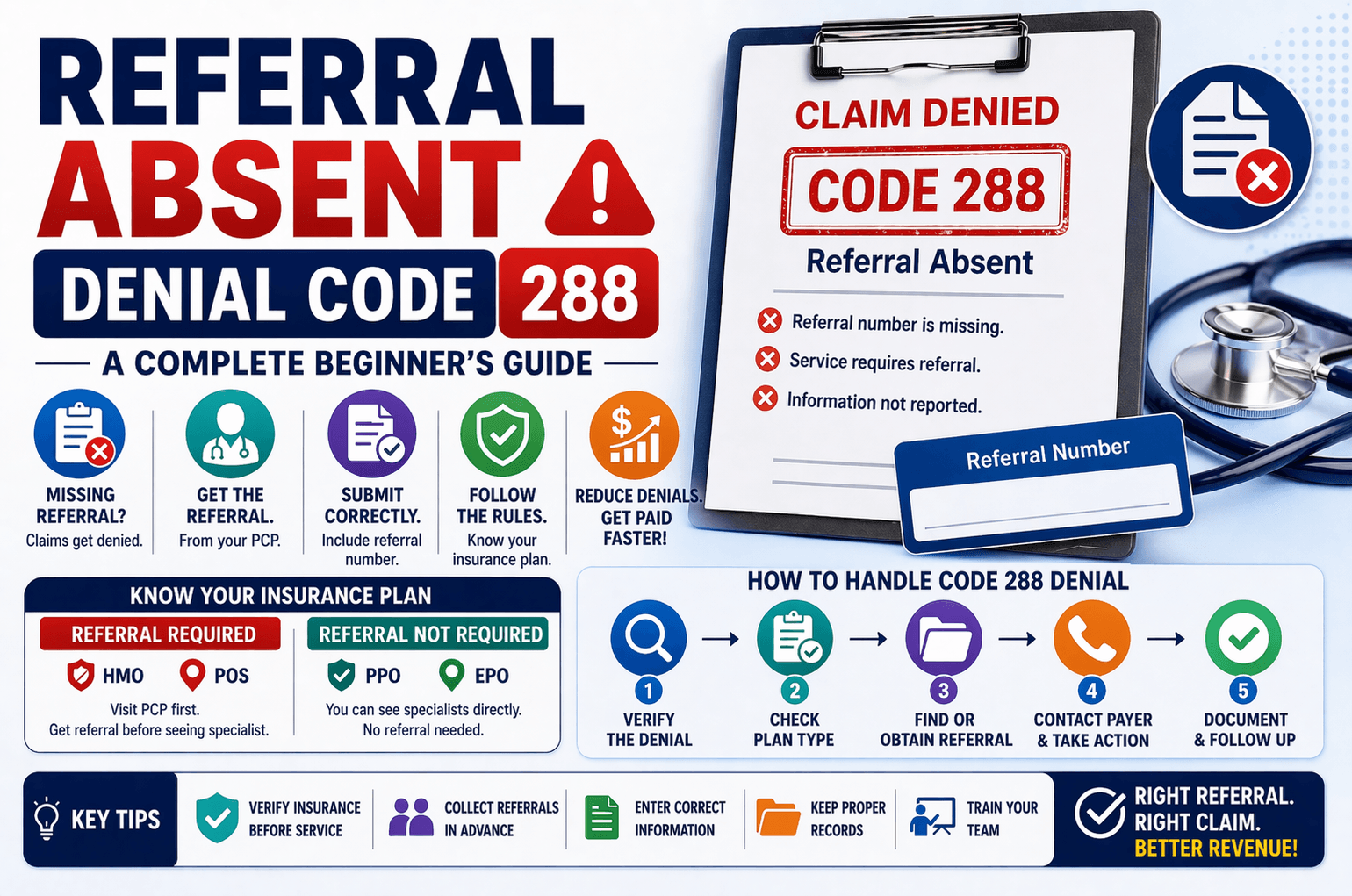
In medical billing, claim denials are a common challenge—and one of the frequent ones is “Referral Absent” (Denial Code 288). This denial occurs when a required referral is missing at the time of claim submission. For beginners in healthcare revenue cycle management, understanding this denial is essential to avoid revenue loss and ensure smooth claim processing.
This guide explains what referral absent denial means, why it happens, how to handle it effectively, and tips to prevent it in the future—all in simple, easy-to-understand language.
What is a Referral in Medical Billing?
A referral is an authorization given by a Primary Care Physician (PCP) for a patient to visit a specialist.
Example:
A patient visits a general doctor for a check-up
The doctor suspects a skin condition
The doctor refers the patient to a dermatologist
In this case:
The general doctor = PCP (Referring Provider)
The dermatologist = Specialist
The document provided = Referral
This referral must be documented and included when submitting a claim, depending on the patient’s insurance plan.
What is Referral Absent Denial (Code 288)?
Referral Absent Denial occurs when:
A claim is submitted without a required referral number.
Where is the referral number found?
CMS-1500 Form: Box 23
UB-04 Form: Locator 63
If this information is missing or incorrect, the insurance payer may deny the claim.
Why Does This Denial Happen?
Several reasons can lead to a referral absent denial:
- Missing Referral Number
The referral number was not entered in the claim form. - Referral Not Obtained
The patient did not receive a referral from the PCP before visiting a specialist. - Wrong Insurance Plan Understanding
Some plans require referrals, while others do not:
HMO / POS: Referral required
PPO / EPO: Referral not required - Documentation Errors
The referral exists but is not documented properly in the billing system.
Understanding Insurance Plan Types
Knowing the patient’s insurance plan is critical.
Plans That Require Referrals
HMO (Health Maintenance Organization)
POS (Point of Service)
Patients must:
Visit PCP first
Get a referral before seeing a specialist
Plans That Do NOT Require Referrals
PPO (Preferred Provider Organization)
EPO (Exclusive Provider Organization)
Patients can:
Directly visit specialists
No referral needed
How to Handle Referral Absent Denial
Here’s a step-by-step approach used by experienced billing professionals:
Step 1: Verify the Denial
Confirm denial reason: Referral missing
Note the denial date
Step 2: Check Patient Insurance Plan
Ask:
Is it HMO or POS?
Or PPO/EPO?
Scenario 1: HMO or POS Plan
Case A: Referral Available in System
Provide referral number to payer
Request claim reprocessing
Ask for Turnaround Time (TAT)
Document claim reference number
Case B: Referral Not in System but Available Elsewhere
Check:
Payer system
Hospital claims (same Date of Service)
If found:
Request payer to use it
Reprocess claim
Case C: Referral Not Found Anywhere
Options:
Submit an appeal
Write off claim (based on client policy)
Collect:
Fax number or mailing address
Time limit for appeal
Scenario 2: PPO or EPO Plan
Inform payer that referral is not required
Request claim reprocessing
Ask for:
Turnaround time
Claim reference number
Example Call Flow (Simplified)
When calling the insurance representative:
“May I know the denial date?”
“What is the patient’s plan type?”
“Since this is a PPO plan, referral is not required. Can you reprocess the claim?”
“What is the turnaround time?”
“May I have the claim reference number?”
This structured communication improves efficiency and success rate.
Key Tips to Avoid Referral Denials
- Verify Insurance Before Service
Always confirm:
Plan type
Referral requirements - Collect Referral in Advance
For HMO/POS:
Ensure referral is obtained before appointment - Enter Correct Data
Double-check referral number in claim form
Use correct fields (Box 23 / Locator 63) - Maintain Proper Documentation
Store referral copies
Link them to patient records - Train Front Desk Staff
Many referral errors originate during patient intake.
Important Notes for Billing Teams
Always follow your organization’s process guidelines
Document every call with payer
Track TAT and follow up regularly
Avoid unnecessary write-offs without verification
FAQs
- What does denial code 288 mean?
It means the claim was denied because a required referral was missing. - Do all insurance plans require referrals?
No. Only HMO and POS plans usually require referrals. PPO and EPO plans typically do not. - Can a denied claim be reprocessed?
Yes, if:
Referral is available
Or referral is not required (based on plan) - What if the referral cannot be found?
You can:
Submit an appeal
Or write off the claim (depending on policy) - Where should the referral number be entered?
CMS-1500: Box 23
UB-04: Locator 63
Conclusion:
Referral Absent Denial (Code 288) is a preventable issue that mainly arises from missing or incorrect referral information. By understanding insurance plan requirements, verifying details upfront, and maintaining proper documentation, billing professionals can significantly reduce such denials.
Handling this denial efficiently requires a structured approach—identify the plan type, locate the referral, communicate clearly with payers, and take appropriate action.
Mastering these steps not only improves claim success rates but also strengthens your overall revenue cycle management process.