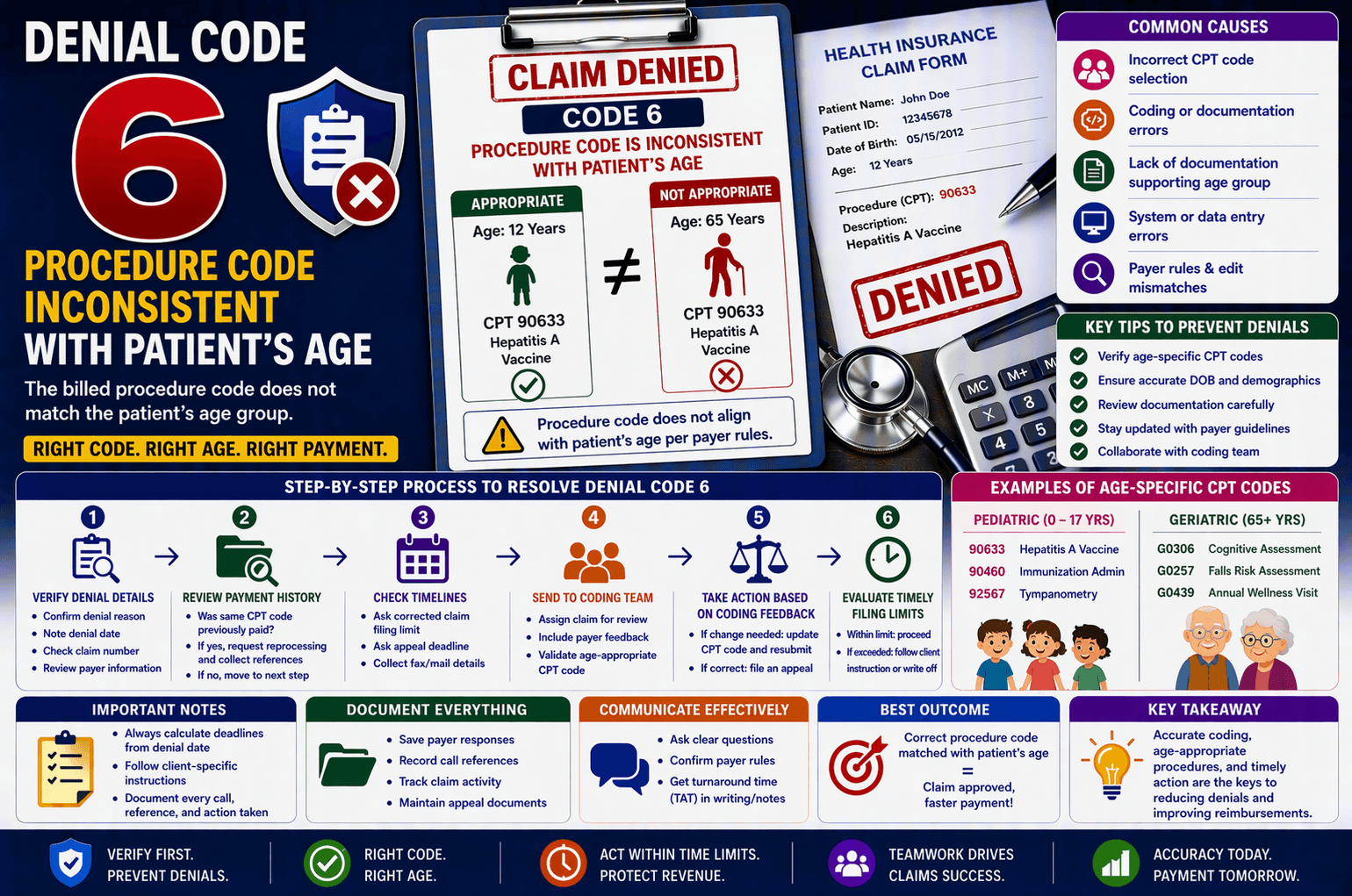
In medical billing, claim denials are common—but understanding why they happen is key to resolving them efficiently. One such denial reason is: “Procedure code is inconsistent with the patient’s age.” This error typically occurs when a CPT (Current Procedural Terminology) code submitted does not align with the patient’s age group. While it may seem straightforward, resolving it requires careful review, coordination with coding teams, and adherence to payer timelines. In this guide, we’ll break down what this denial means, why it happens, and how to handle it step-by-step in a practical, beginner-friendly way.
What Does “Procedure Code Inconsistent with Patient’s Age” Mean?
This denial indicates that the procedure code billed is not appropriate for the patient’s age category according to the insurance payer’s guidelines.
Example: A pediatric procedure billed for an adult patient; A geriatric-specific service billed for a child. Insurance systems automatically flag such mismatches, leading to claim rejection or denial.
Why Does This Denial Occur?
There are several common reasons behind this issue:
1. Incorrect CPT Code Selection Some CPT codes are age-specific, and selecting the wrong one triggers denial.
2. Coding Errors Human errors during coding—such as selecting similar-looking codes—can lead to mismatches.
3. Lack of Documentation Clarity If documentation doesn’t clearly justify the procedure for that age group, payers may deny the claim.
4. System or Data Entry Errors Incorrect patient DOB (Date of Birth) can also result in age-related discrepancies.
Step-by-Step Process to Handle This Denial
Handling this denial efficiently requires a structured approach.
Step 1: Verify Denial Details Confirm the denial reason; Note the denial date; Check claim number and payer details.
Step 2: Review Payment History Check whether the same CPT code was previously paid by the same insurance. If YES: Request reprocessing and collect TAT, claim reference, call reference. If NO: Move to next step.
Step 3: Check Filing and Appeal Timelines Ask for corrected claim limit, appeal deadline, fax/mailing details.
Step 4: Send to Coding Team Assign claim for CPT review. Include payer feedback for accuracy.
Step 5: Take Action Based on Coding Feedback If change needed: update CPT and resubmit. If correct: file appeal.
Step 6: Evaluate Timely Filing Limits Within limit → proceed; Exceeded → follow client instructions or write off.
Key Tips for Avoiding This Denial
Double-check age-specific CPT codes; Ensure correct DOB and patient details; Strengthen documentation; Stay updated with payer policies; Collaborate with coding team.
Practical Example
A CPT code meant for children under 5 is billed for a 12-year-old patient → claim denied. Fix: verify → send to coding → update CPT → resubmit within deadline.
Frequently Asked Questions (FAQs)
1. What are age-specific CPT codes? Codes applicable only for certain age groups.
2. Can I resubmit a corrected claim? Yes, within filing limits.
3. What if coding is correct? File an appeal.
4. Filing deadline passed? Usually write off unless client says otherwise.
5. Why check previous payments? Helps justify reprocessing.
Conclusion
This denial is common but manageable with correct coding, verification, and timely action. Following a structured workflow helps reduce denials and improve reimbursements.