In medical billing and revenue cycle management, claim denials are a common challenge. One such denial is Denial Code 227, which occurs when required information from the patient, insured, or responsible party is missing or incomplete. This denial can delay payments and increase administrative workload if not handled properly.
Understanding Denial Code 227 is essential for billing professionals, especially beginners, as it involves coordination between providers, patients, and insurance companies. In this article, we’ll break down what this denial means, why it happens, and how to manage it effectively.
What Is Denial Code 227?
Denial Code 227 indicates that:
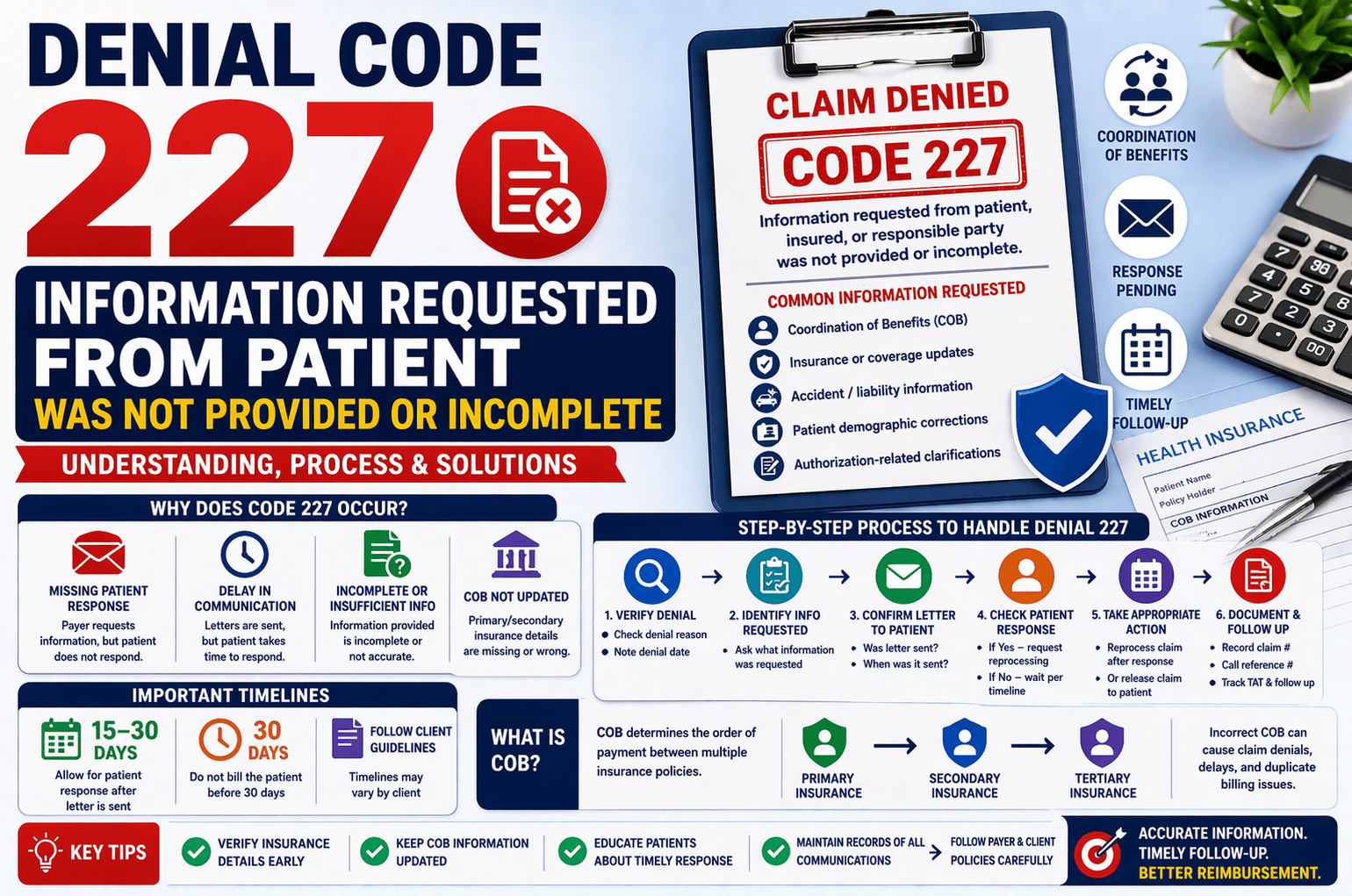
The insurance payer requested additional information from the patient (such as Coordination of Benefits or other details), but the information was either not provided or was insufficient.
Common Information Requested
Coordination of Benefits (COB) details
Updated insurance coverage
Accident or liability information
Patient demographic corrections
Authorization-related clarifications
Understanding Coordination of Benefits (COB)
One of the most common reasons for Denial Code 227 is missing or incomplete COB information.
What is COB?
Coordination of Benefits determines:
Which insurance is primary
Which is secondary
Which is tertiary
Why COB Matters
If COB is not updated:
Claims may be sent to the wrong payer
Payments may be delayed or denied
Duplicate billing issues can occur
Example:
A patient has two insurance policies:
Employer insurance (Primary)
Spouse’s insurance (Secondary)
If the provider bills the secondary insurance first without proper COB, the claim may be denied with Code 227.
When Does Denial Code 227 Occur?
This denial typically arises when:
- Missing Patient Response
The payer sends a request to the patient for additional details, but:
The patient does not respond
The response is incomplete
- Delay in Patient Communication
Even if a letter is sent:
Patients may take time to respond
Insurance companies may keep the claim pending or deny it
- Incorrect or Outdated Information
Insurance details are outdated
COB information is not updated
Step-by-Step Call Handling Scenario
When you encounter Denial Code 227, follow a structured approach:
Step 1: Verify Claim Details
When was the claim received?
What is the denial date?
Step 2: Identify Requested Information
Ask:
What information was requested from the patient?
COB update?
Other documentation?
Step 3: Confirm Patient Communication
Was a letter sent to the patient?
If Yes → When was it sent?
If No → Request action from payer
Step 4: Check Patient Response
Has the patient responded?
If Yes → Request claim reprocessing
If No → Proceed based on timelines
Step 5: Collect Reference Details
Always document:
Claim number
Call reference number
Important Timelines to Remember
Timing plays a crucial role in handling this denial.
Key Rules:
Allow 15–30 days after sending the letter to the patient
Do not bill the patient before 30 days
Follow client-specific guidelines if different
Scenario-Based Actions:
- Letter Sent & Response Received
Request reprocessing of claim
Note the Turnaround Time (TAT)
Set follow-up - Letter Sent but No Response
Wait for 30 days
If no response → Release claim to patient - Letter Not Sent
Request payer to send communication
Or proceed to release claim to patient as per policy
Practical Tips for Handling Denial Code 227
- Always Verify COB Early
Check patient insurance details during registration
Confirm primary and secondary payers - Educate Patients
Inform patients about the importance of responding to insurance requests
Encourage timely updates - Track Communication
Maintain records of:
Letter sent date
Patient responses
Follow-up actions - Check Payment History
Look for payments from other insurers
Identify correct primary payer - Follow Client Guidelines
Every organization may have slightly different workflows
Always prioritize internal SOPs
Example Workflow
Let’s simplify with a real-world scenario:
Claim submitted → Denied with Code 227
Insurance says: “COB information required from patient”
You check:
Letter sent 10 days ago
Action:
Wait until 30 days are completed
After 30 days:
No response → Bill patient or follow escalation process
Key Takeaways
Denial Code 227 is mainly due to missing patient-provided information
COB issues are the most common cause
Always allow 15–30 days for patient response
Proper documentation and follow-up are critical
Never rush to bill the patient before the allowed timeframe
Frequently Asked Questions (FAQs)
- What is the main reason for Denial Code 227?
The primary reason is missing or incomplete information requested from the patient, especially COB details. - How long should we wait before taking action?
You should wait at least 15–30 days after the letter is sent to the patient. - Can we bill the patient immediately?
No. You must wait 30 days before billing the patient, unless your client policy states otherwise. - What should I do if the patient has already responded?
If the payer confirms receipt of updated information, request claim reprocessing and note the TAT. - How can this denial be prevented?
Verify insurance details upfront
Update COB regularly
Educate patients about timely responses
Conclusion:
Denial Code 227 is a manageable but time-sensitive issue in medical billing. It highlights the importance of accurate patient information and timely communication between all parties involved.
By following structured workflows, tracking timelines, and ensuring proper documentation, billing professionals can reduce delays and improve claim success rates. For beginners, mastering this denial is a valuable step toward becoming efficient in revenue cycle management.
Consistent follow-up, patient awareness, and proactive verification are the keys to minimizing Denial Code 227 and maintaining a healthy billing process.