resolution and reimbursement. One such denial is “199: Revenue Code and Procedure Code Do Not Match.”
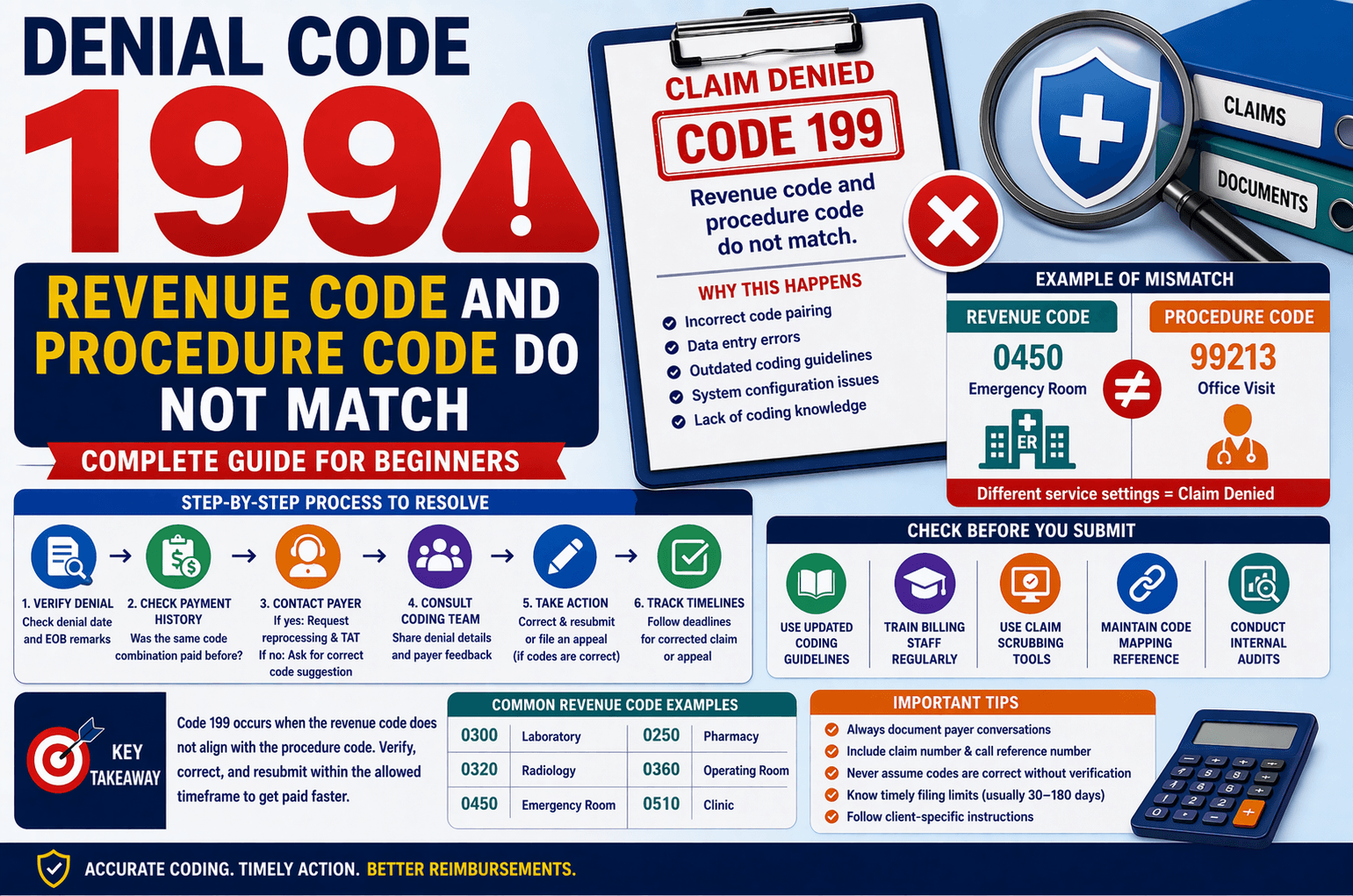
This denial occurs when there is a mismatch between the revenue code (which describes the department or service category) and the procedure code (CPT/HCPCS) (which identifies the specific service performed).
If not handled correctly, this issue can delay payments and increase accounts receivable. This guide explains everything you need to know about this denial, how to resolve it, and how to prevent it in the future.
What is Denial Code 199?
Denial Code 199 indicates that:
The revenue code billed does not align with the procedure code submitted
The payer cannot validate the service due to incorrect coding combination
Simple Example:
Revenue Code: 0450 (Emergency Room)
CPT Code: 99213 (Office Visit)
These two codes represent different service settings, so the claim gets denied.
Understanding Revenue Codes and Procedure Codes
Revenue Codes
Revenue codes are used by hospitals and facilities to indicate:
Department where service was provided
Type of service rendered
Examples:
0300 – Laboratory
0450 – Emergency Room
0250 – Pharmacy
Procedure Codes (CPT/HCPCS)
Procedure codes describe:
The exact service or procedure performed
Examples:
99285 – ER Visit (High severity)
80053 – Comprehensive metabolic panel
J1100 – Injection drug
The key is that both codes must logically correspond.
Why This Denial Happens
There are several common reasons for this mismatch:
- Incorrect Code Pairing
Billing a CPT code that doesn’t belong to the revenue code category. - Data Entry Errors
Manual mistakes while entering codes into the system. - Outdated Coding Guidelines
Using old coding standards that are no longer accepted by payers. - System Configuration Issues
Billing software may auto-assign incorrect revenue codes. - Lack of Coding Knowledge
Incomplete understanding of correct code combinations.
Step-by-Step Process to Resolve the Denial
Here’s a practical workflow you can follow:
Step 1: Verify Denial Details
Check the denial date
Review the Explanation of Benefits (EOB)
Step 2: Check Payment History
Look for similar claims
Confirm if the same CPT and revenue code combination was previously paid
If YES:
Contact payer and request reprocessing
Ask:
“Can you reprocess this claim as it was paid earlier with the same codes?”
“What is the turnaround time (TAT)?”
If NO:
Ask payer:
“Can you suggest the correct revenue code or CPT code?”
(Note: Sometimes reps may not provide this)
Step 3: Consult Coding Team
Assign the case to the coding team with:
Denial details
Payer feedback
Any suggested corrections
This step is critical for accurate correction.
Step 4: Based on Coding Team Response
Case A: Codes Need Correction
Update the correct revenue or CPT code
Submit a corrected claim
Ask:
Time limit for corrected claim submission
Fax number or mailing address if needed
Case B: Codes Are Correct
Prepare and submit an appeal
Ask:
Appeal submission time limit
Required documents
Step 5: Track Timelines
Always calculate timelines from the denial date:
If within limit → proceed
If exceeded → follow client instructions (appeal or write-off)
Important Tips for Handling Denial 199
Always document payer conversations
Include:
Claim number
Call reference number
Never assume codes are correct without verification
Keep track of:
Reprocessing TAT
Appeal deadlines
Follow client-specific instructions for exceptions
How to Prevent This Denial
- Use Updated Coding Guidelines
Ensure your team follows the latest CPT and revenue code mapping rules. - Train Billing Staff
Regular training reduces coding errors significantly. - Use Claim Scrubbing Tools
Automated systems can detect mismatches before submission. - Maintain Code Mapping Reference
Keep a quick reference guide for:
Common CPT and revenue code combinations - Conduct Internal Audits
Review claims periodically to identify recurring issues.
Real-Life Example
Scenario:
A hospital bills:
Revenue Code: 0300 (Lab)
CPT Code: 71020 (Chest X-ray)
Issue:
X-ray belongs to radiology, not laboratory.
Resolution:
Correct Revenue Code → 0320 (Radiology)
Resubmit corrected claim
Frequently Asked Questions (FAQs)
- What does denial code 199 mean?
It means the revenue code and procedure code billed together are not compatible according to payer rules. - Can I reprocess the claim without correction?
Yes, but only if the same combination was previously paid. Otherwise, correction is required. - What if the payer doesn’t suggest the correct code?
You should assign the claim to the coding team for review and correction. - What is the time limit to submit a corrected claim?
It varies by payer, typically ranging from 30 to 180 days from the denial date. - When should I file an appeal?
If the coding team confirms that the billed codes are correct, you should submit an appeal within the allowed timeframe.
Conclusion:
Denial Code 199 can be frustrating, but it is manageable with a structured approach. The key lies in understanding the relationship between revenue codes and procedure codes, verifying payer responses, and involving the coding team when needed.
By following proper workflows, documenting every step, and implementing preventive measures, you can significantly reduce such denials and improve your revenue cycle efficiency.
Consistent training, accurate coding, and timely follow-ups are your best tools to ensure faster reimbursements and fewer claim rejections.