
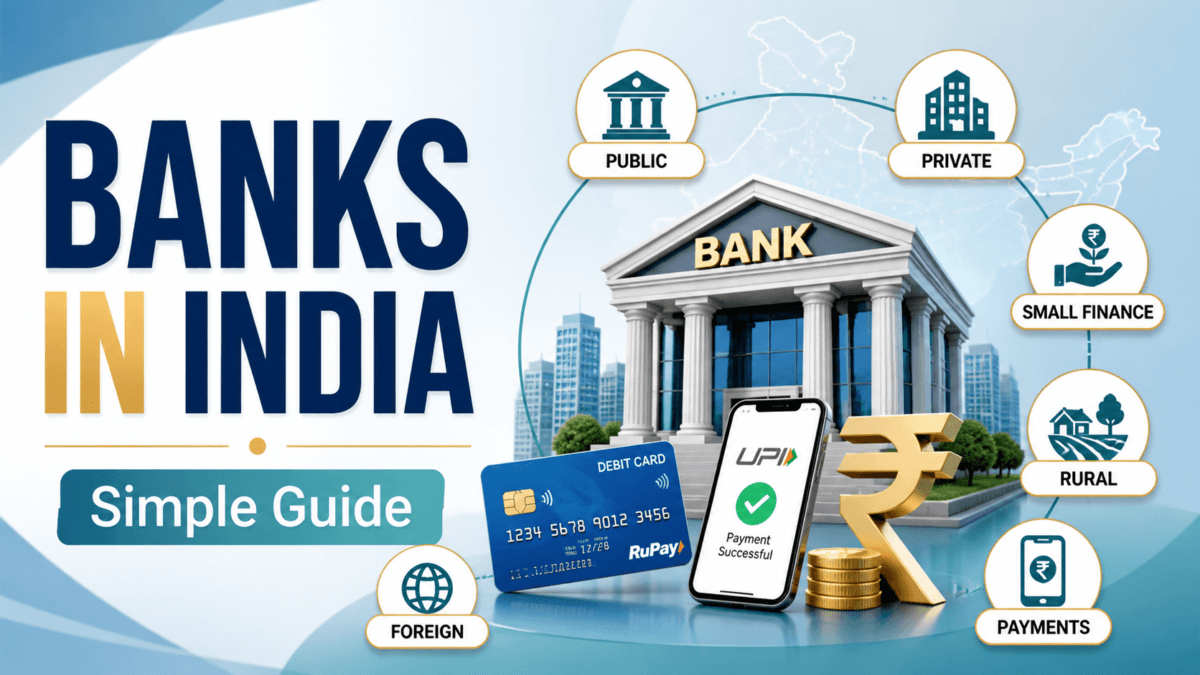
India’s banking system is not just a network of branches, ATMs and mobile apps. It is the quiet machinery behind everyday life: a farmer receiving a crop loan, a student paying college fees, a small shopkeeper accepting UPI, a family saving for a wedding, a migrant worker sending money home, or a business importing goods from another country.
That is why banks matter so deeply in India. They hold our savings, move our money, support businesses, connect villages to the formal economy and help millions of people enter the financial system for the first time. The Reserve Bank of India lists India’s formal banking landscape across public sector banks, private sector banks, small finance banks, local area banks, payments banks, regional rural banks and foreign banks operating in India.
This article gives you a simple, publish-ready guide to India’s banks, including payments banks such as Jio Payments Bank, Airtel Payments Bank and India Post Payments Bank. One important update: Paytm Payments Bank appears on the RBI’s public bank list, but the RBI cancelled its banking licence on April 24, 2026, according to Reuters, so it should now be treated as a former/closed payments bank rather than an active option.
Why India Has So Many Types of Banks
India is too large and diverse for one kind of bank to serve everyone. A salaried person in Mumbai may need credit cards, mutual funds and digital banking. A farmer in Bihar may need crop credit and a nearby branch. A street vendor may need a zero-balance account and UPI. A start-up may need business banking and payment gateways. A multinational company may need trade finance and foreign exchange.
That is why India has different banking models. Public sector banks carry trust and reach. Private banks often bring speed, technology and premium service. Small finance banks focus on underserved customers. Regional rural banks serve rural India. Payments banks make basic banking easier through mobile-first and low-cost services, although they cannot lend money like normal banks. RBI’s payments bank guidelines say payments banks are not permitted to lend to any person, while RBI’s financial inclusion strategy says payments banks were created to provide small savings accounts and payment/remittance services to migrant workers, low-income households, small businesses and other underserved users.
Public Sector Banks in India
Public sector banks are the backbone of Indian banking. They are widely trusted, have deep branch networks and are often the first choice for government schemes, pensions, agriculture, education loans and basic savings accounts. RBI currently lists 12 public sector banks in India.
State Bank of India is India’s largest and most widely recognized public sector bank. It is good for people who want a strong branch network, reliable government-linked services, loans, savings products and digital banking through a well-established institution.
Bank of Baroda is useful for families, NRIs, businesses and regular savers. Its strength lies in its national presence, international connections and wide range of retail and business banking services.
Punjab National Bank is a major public bank with a strong presence across northern India and beyond. It is good for basic banking, small businesses, agriculture-linked services and customers who prefer a traditional branch-based relationship.
Canara Bank is known for a wide public banking network and strong retail banking services. It is useful for savings accounts, education loans, home loans and everyday banking.
Union Bank of India serves individuals, businesses and rural customers. It is good for people who want a public bank with broad reach and access to government-backed banking schemes.
Bank of India is a long-established public sector bank with domestic and international operations. It is useful for customers who need savings, loans, remittances and business banking from a traditional institution.
Indian Bank has a strong presence in southern India and many other parts of the country. It is good for retail customers, pensioners, students, MSMEs and people who prefer dependable public banking.
Central Bank of India is one of India’s older public sector banks. It is useful for simple savings accounts, government schemes, pension-related banking and branch-based service.
Indian Overseas Bank has historically served customers with domestic and overseas banking needs. It is good for savings, remittances, trade-related services and customers in southern India.
UCO Bank is a public bank with a long history and branch presence across India. It is useful for everyday banking, government benefit accounts and small business customers.
Bank of Maharashtra has a strong base in Maharashtra and serves customers across India. It is good for retail banking, MSMEs and people who want a public bank with regional strength.
Punjab & Sind Bank is smaller than some other public sector banks but remains important for retail banking and small businesses. It is useful for customers who value simple services and community-style banking.
Private Sector Banks in India
Private banks are popular for faster service, better apps, credit cards, premium banking, business accounts and smoother digital experiences. RBI lists 21 private sector banks in India.
HDFC Bank is one of India’s most popular private banks. It is good for salaried customers, credit cards, digital banking, home loans, business accounts and premium service.
ICICI Bank is strong in digital banking, loans, cards and investment-linked services. It is useful for customers who want a modern bank with wide branch and app-based access.
Axis Bank is good for personal banking, salary accounts, credit cards, loans and business banking. It is often chosen by urban customers who want convenience and digital tools.
Kotak Mahindra Bank is popular for savings accounts, wealth services, cards and premium banking. It is good for customers who want a private-bank experience with investment-friendly options.
IndusInd Bank is useful for customers looking for flexible savings accounts, vehicle finance, business banking and personalized service.
IDFC FIRST Bank is known for customer-friendly retail banking, savings accounts and digital-first services. It is good for people who prefer simple, transparent banking experiences.
YES Bank serves retail, MSME and corporate customers. It is useful for digital banking, business accounts, cards and urban banking needs.
Federal Bank has strong roots in Kerala and a growing national presence. It is good for NRI banking, remittances, digital services and family banking.
RBL Bank is useful for credit cards, retail banking, small business services and digital banking.
Bandhan Bank grew from microfinance roots and is important for financial inclusion. It is good for small savers, micro-businesses and customers in eastern India.
IDBI Bank serves retail and business customers and has a long institutional history. It is useful for loans, deposits and traditional banking services.
South Indian Bank is strong in Kerala and southern India. It is good for NRI customers, remittances and everyday banking.
Karnataka Bank is a regional private bank with a loyal customer base. It is useful for small businesses, personal banking and customers in Karnataka and nearby regions.
Karur Vysya Bank has a strong business and trading community base. It is good for MSMEs, traders and customers in Tamil Nadu and southern India.
City Union Bank is known for serving small businesses and regional customers. It is useful for merchants, traders and traditional banking users.
Tamilnad Mercantile Bank has strong roots in Tamil Nadu’s business communities. It is good for traders, MSMEs and family banking.
CSB Bank has a strong presence in Kerala and serves retail, SME and gold-loan customers. It is useful for customers who prefer regional relationship banking.
DCB Bank is a smaller private bank with focus on retail, SME and niche banking. It is good for customers who want personalized banking and deposit products.
Dhanlaxmi Bank is a Kerala-based private bank serving retail and business customers. It is useful for local banking, deposits and traditional services.
Jammu & Kashmir Bank plays an important role in Jammu & Kashmir’s economy. It is good for regional customers, businesses and local development-linked banking.
Nainital Bank is a smaller private bank with a regional focus. It is useful for customers in Uttarakhand and nearby areas who want community-style banking.
Small Finance Banks in India
Small finance banks were created to deepen financial inclusion. Their purpose is to provide savings accounts and credit to underserved people, including small businesses, small farmers, micro industries and unorganized sector workers. RBI guidelines say small finance banks are meant to serve unserved and underserved sections through low-cost, technology-led operations.
RBI currently lists 11 small finance banks.
AU Small Finance Bank is one of the best-known small finance banks. It is good for vehicle finance, small business banking, savings accounts and customers looking for modern digital services.
Capital Small Finance Bank focuses on smaller towns and semi-urban customers. It is useful for deposits, local businesses and simple credit needs.
Equitas Small Finance Bank is good for microfinance customers, small businesses, vehicle loans and people entering formal banking.
ESAF Small Finance Bank has roots in financial inclusion and microfinance. It is useful for low-income households, small traders and community-based banking.
Suryoday Small Finance Bank serves microfinance customers, small borrowers and savers. It is good for customers who need accessible credit and basic banking.
Ujjivan Small Finance Bank is known for serving urban and semi-urban underserved customers. It is useful for small loans, savings and digital banking.
Utkarsh Small Finance Bank has strong roots in northern and eastern India. It is good for micro, small and rural customers who need savings and credit.
Slice Small Finance Bank, earlier linked with North East Small Finance Bank after merger/renaming, is listed by RBI as Slice Small Finance Bank. It is useful for customers looking at newer digital-led banking models.
Jana Small Finance Bank serves individuals, small businesses and microfinance customers. It is good for inclusive banking, deposits and small-ticket loans.
Shivalik Small Finance Bank is useful for digital banking, MSME customers and people who want smaller-bank service with modern tools.
Unity Small Finance Bank is a newer small finance bank. It is good for deposit customers, small businesses and people looking for simple banking products.
Payments Banks in India
Payments banks are a special category. They are not full-service banks. They can help with deposits, money transfers, debit cards, wallets, UPI and small savings, but they cannot give loans like normal banks. Their importance is emotional as much as financial: they help a worker send money home, a small shop accept digital payments, and a household open a basic account without feeling intimidated by formal banking.
RBI’s public list shows six payments banks: Airtel Payments Bank, India Post Payments Bank, Fino Payments Bank, Paytm Payments Bank, Jio Payments Bank and NSDL Payments Bank. However, as noted earlier, Paytm Payments Bank’s licence was cancelled on April 24, 2026, so it should not be considered an active banking option going forward.
Airtel Payments Bank is good for mobile-first users, especially people already using Airtel services. Its benefit is convenience: simple digital banking, quick payments and easy access through a telecom-linked ecosystem.
India Post Payments Bank is one of the most socially important payments banks because it uses India Post’s reach. It is good for rural households, senior citizens and people who trust the post office network.
Fino Payments Bank is useful for low-income customers, small merchants and cash-in/cash-out services. Its strength is its merchant and agent network, especially where full bank branches may not be easy to access.
Jio Payments Bank is useful for digital-first users and people connected to the Jio ecosystem. Its benefit lies in simple payments, basic banking access and integration with a large consumer digital network.
NSDL Payments Bank is good for customers who want basic digital banking from an institution connected with India’s financial infrastructure ecosystem. It is useful for simple accounts, payments and digital access.
Paytm Payments Bank was once important in India’s mobile payments story, but it is now best described as a former payments bank because the RBI cancelled its licence in April 2026. The Paytm app and Paytm’s other payment services are separate from the cancelled banking licence, but Paytm Payments Bank itself should not be treated as an active bank.
Local Area Banks in India
Local area banks are small banks meant to serve limited regions. RBI lists two local area banks.
Coastal Local Area Bank serves a limited regional market. It is useful for customers who prefer local banking, personal relationships and simple deposit or lending services.
Krishna Bhima Samruddhi Local Area Bank focuses on local communities and smaller customers. It is good for regional banking needs, especially where people value familiar, relationship-based service.
Regional Rural Banks in India
Regional Rural Banks, or RRBs, are deeply important in India’s financial story. They bring banking closer to villages, farmers, self-help groups, rural workers and small local businesses. RBI lists 28 Regional Rural Banks in India.
Andhra Pradesh Grameena Bank is good for rural customers in Andhra Pradesh, especially farmers, small traders and local households.
Assam Gramin Bank supports rural and semi-urban banking in Assam. It is useful for agriculture, savings and local credit needs.
Arunachal Pradesh Rural Bank helps extend formal banking in a geographically challenging state. It is good for basic accounts and rural development-linked banking.
Bihar Gramin Bank serves one of India’s most populous rural markets. It is useful for farmers, small businesses, self-help groups and government benefit transfers.
Chhattisgarh Gramin Bank supports rural households, farmers and small enterprises in Chhattisgarh. Its benefit is local access.
Gujarat Gramin Bank serves rural Gujarat. It is good for agriculture, small businesses and customers outside large urban centres.
Haryana Gramin Bank supports rural and semi-urban banking in Haryana. It is useful for farmers, dairy-linked households and small traders.
Himachal Pradesh Gramin Bank serves hill communities where banking access can be difficult. It is good for local savings, credit and government scheme access.
Jharkhand Gramin Bank helps rural and tribal-region customers access formal banking. It is useful for small loans, savings and financial inclusion.
Jammu and Kashmir Grameen Bank supports rural communities in Jammu & Kashmir. It is good for local households, farmers and small enterprises.
Karnataka Grameena Bank serves rural Karnataka. It is useful for agriculture, self-help groups and small businesses.
Kerala Grameena Bank is important for rural and semi-urban Kerala. It is good for family banking, savings and local credit.
Maharashtra Gramin Bank serves rural Maharashtra. It is useful for agriculture, small businesses and government-linked accounts.
Madhya Pradesh Gramin Bank supports rural customers across Madhya Pradesh. It is good for farmers, small borrowers and local savings.
Manipur Rural Bank helps bring banking access to local communities in Manipur. It is useful for basic banking and rural credit.
Meghalaya Rural Bank serves communities in Meghalaya. It is good for local households, small traders and rural financial inclusion.
Mizoram Rural Bank supports banking access in Mizoram. It is useful for small savers, farmers and local businesses.
Nagaland Rural Bank helps rural customers in Nagaland access formal finance. It is good for savings, small loans and community banking.
Odisha Grameen Bank serves rural Odisha. It is useful for farmers, self-help groups, small enterprises and government payments.
Punjab Gramin Bank supports rural Punjab. It is good for agriculture-linked banking, savings and small business credit.
Puducherry Grama Bank serves local communities in Puducherry. It is useful for simple accounts, local loans and rural banking.
Rajasthan Gramin Bank supports rural and semi-urban Rajasthan. It is good for farmers, artisans, small traders and households.
Tamil Nadu Grama Bank serves rural Tamil Nadu. It is useful for agriculture, small businesses and family savings.
Telangana Grameena Bank supports rural Telangana. It is good for farmers, self-help groups and small entrepreneurs.
Tripura Gramin Bank serves rural Tripura. It is useful for local households, small businesses and government benefit accounts.
Uttar Pradesh Gramin Bank serves a very large rural population. It is good for farmers, small traders, students and benefit-transfer accounts.
Uttarakhand Gramin Bank supports rural and hill-area customers in Uttarakhand. It is useful for local savings, agriculture and small loans.
West Bengal Gramin Bank serves rural West Bengal. It is good for farmers, self-help groups, small traders and local communities.
Foreign Banks Operating in India
Foreign banks play a different role. They may not be everyday banks for every Indian household, but they are important for international trade, multinational companies, foreign exchange, NRI services, investment banking and cross-border financial flows. RBI lists 44 foreign banks with banking presence in India.
AB Bank is useful for customers and businesses connected with Bangladesh-India trade and regional banking.
American Express Banking Corporation is known for card and premium financial services. It is useful for global payment and corporate banking needs.
Australia and New Zealand Banking Group is useful for businesses with Australia, New Zealand and Asia-Pacific trade links.
Barclays Bank is strong in global corporate and investment banking. It is good for large businesses and international financial services.
Bank of America serves corporate, institutional and global banking customers. It is useful for multinational companies and cross-border finance.
Bank of Bahrain and Kuwait supports customers with Gulf-region financial links. It is useful for trade and remittance-related banking.
Bank of Ceylon is useful for India-Sri Lanka business and regional banking connections.
Bank of China supports China-India trade and corporate banking. It is useful for companies involved in cross-border commerce.
Bank of Nova Scotia is useful for international corporate banking and trade-linked services.
BNP Paribas is a major European bank serving corporate and institutional clients. It is good for trade finance, investment banking and global services.
Citibank N.A. has long been associated with premium banking, corporate banking and global financial services in India.
Rabobank is known globally for food and agriculture finance. It is useful for agri-business and international corporate banking.
Credit Agricole Corporate and Investment Bank serves large companies and institutions. It is good for structured finance and global corporate banking.
CTBC Bank is useful for Taiwan-India business connections and corporate banking.
DBS Bank India combines foreign-bank roots with a strong India presence. It is good for digital banking, corporate services and premium customers.
Deutsche Bank serves corporate, investment and private banking customers. It is useful for global business and financial markets services.
Doha Bank is useful for customers and companies with Qatar and Gulf-region links.
Emirates NBD Bank supports UAE-India business and Gulf-linked banking needs.
First Abu Dhabi Bank is useful for large businesses, trade finance and UAE-India financial links.
FirstRand Bank supports corporate and institutional banking with South Africa-linked expertise.
HSBC is one of the best-known foreign banks in India. It is good for international banking, NRI services, wealth, corporate banking and trade.
Industrial and Commercial Bank of China supports China-linked business banking and international trade.
Industrial Bank of Korea is useful for Korean companies and trade-linked financial services.
J.P. Morgan Chase Bank is a major global financial institution. It is good for investment banking, institutional services and multinational companies.
JSC VTB Bank supports Russia-linked trade and corporate banking services.
KEB Hana Bank is useful for Korea-India business banking and cross-border corporate services.
Kookmin Bank supports Korean business customers and international banking needs.
Mashreq Bank is useful for Gulf-region trade, corporate banking and remittance-related services.
Mizuho Bank supports Japanese companies and large corporate customers in India.
MUFG Bank is another major Japanese bank serving corporate and institutional clients, especially companies with Japan-India links.
NongHyup Bank is useful for Korean-linked business and specialized corporate banking.
NatWest Markets focuses on markets, trading and institutional financial services.
PT Bank Maybank Indonesia supports Southeast Asia-linked banking and corporate relationships.
Qatar National Bank is useful for Gulf-linked business, trade and corporate banking.
Sberbank supports Russia-linked banking and trade finance needs.
SBM Bank India is a foreign-origin bank with an India-incorporated presence. It is useful for digital banking, savings and specialized services.
Shinhan Bank supports Korean companies, expats and India-Korea business activity.
Societe Generale is useful for corporate, investment and financial markets services.
Sonali Bank supports Bangladesh-linked banking and regional business needs.
Standard Chartered Bank has a long history in India. It is good for international banking, credit cards, NRI services, corporate banking and trade.
Sumitomo Mitsui Banking Corporation serves Japanese companies and large corporate clients.
UBS AG is known globally for wealth management and investment services. It is useful for high-net-worth and institutional financial needs.
United Overseas Bank supports Southeast Asia-linked business banking and trade.
Woori Bank is useful for Korea-India business banking and corporate customers.
Why This Banking Network Matters
India’s banking system is more than a financial industry. It is a bridge between the formal economy and everyday people. When a rural family opens its first account, a woman joins a self-help group, a small shop accepts digital payments, or a student receives an education loan, banking becomes a tool of dignity.
The growth of financial inclusion shows why this matters. India’s Financial Inclusion Index rose to 67.0 for the year ending March 2025, compared with 64.2 in March 2024, showing improvement across access, usage and quality.
Still, the best bank is not the same for everyone. A farmer may prefer a regional rural bank or public sector bank. A salaried professional may like HDFC Bank, ICICI Bank, Axis Bank or SBI. A small merchant may benefit from Airtel Payments Bank, Fino Payments Bank or India Post Payments Bank. A start-up may choose a private bank. A multinational company may need HSBC, Standard Chartered, J.P. Morgan, DBS or Deutsche Bank.
Conclusion: Banks Are Really About Trust
At first glance, a bank is just a place to keep money. But in real life, it is much more personal than that. A bank holds a person’s salary, a parent’s savings, a farmer’s hope, a student’s dream, a widow’s pension and a shopkeeper’s daily income.
India’s banking system is powerful because it has many doors. Some doors are large and old, like SBI and Punjab National Bank. Some are modern and fast, like HDFC Bank and ICICI Bank. Some are built for villages, like regional rural banks. Some are small but meaningful, like small finance banks. Some live inside phones, like payments banks. Together, they tell the story of a country trying to make finance available not only to the wealthy and urban, but to everyone.
The smartest choice is not always the most famous bank. The smartest choice is the bank that fits your life: your income, your location, your comfort with technology, your need for loans, your trust in branches and your future goals. In a country as vast as India, that choice matters — because good banking is not just about money. It is about security, opportunity and peace of mind.













1 thought on “Banks in India: A Simple Guide to Public, Private, Small Finance, Rural, Foreign and Payments Banks”