Indian markets began the June 1, 2026 session with a cautious positive tone, as the Nifty 50 moved slightly higher in early trade despite a sharp rise in crude oil prices. The early support came mainly from financial and domestic-facing stocks, while a firmer rupee also helped sentiment. However, the market mood remained fragile because expensive crude oil can quickly create pressure for an energy-importing country like India.
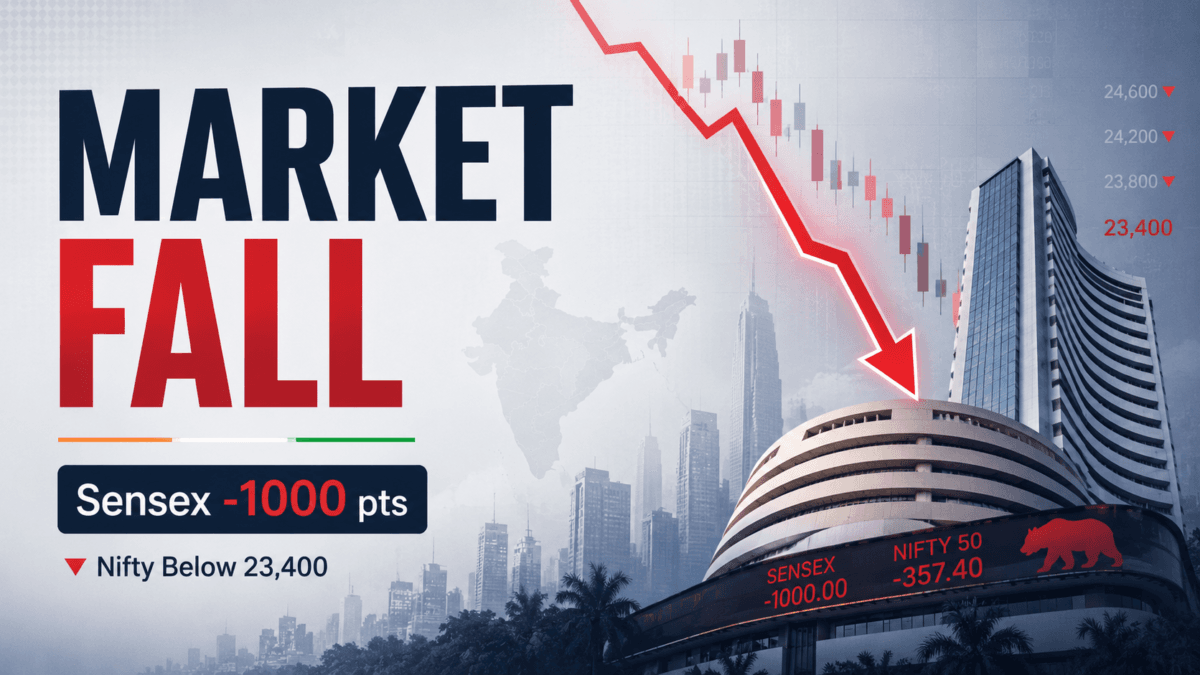
The session showed a familiar pattern in Indian equities: banking strength can support the index in the short term, but global oil prices, foreign investor flows, currency movement, and geopolitical tensions can quickly change the direction. By the end of the day, Indian benchmarks had reversed lower, with the Nifty 50 falling 0.7% to 23,382.6 and the Sensex losing 0.68% to 74,267.34.
Why the Nifty Opened Higher
Financial Stocks Offered Early Support
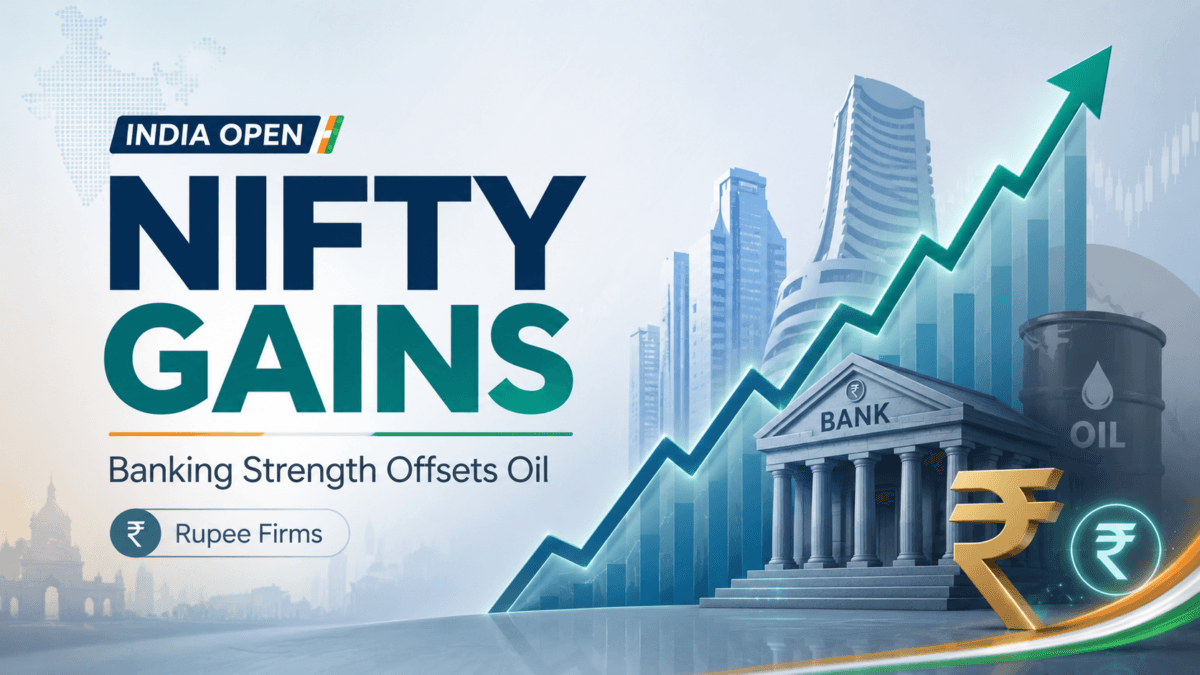
The Nifty 50 rose 0.13% in early trade as investors selectively bought large-cap financial and domestic-oriented stocks. Banking and financial shares often play a large role in Indian market direction because they carry heavy weight in benchmark indices and reflect confidence in credit growth, consumer demand, and economic activity.
The Nifty Bank index remained in focus because investors expected stable credit growth, healthy balance sheets, and resilient domestic demand conditions. This helped offset some of the pressure created by rising oil prices and global uncertainty.
Domestic-Facing Stocks Looked More Attractive
When global risk rises, investors often prefer companies more closely linked to domestic demand. Banks, infrastructure companies, and some large-cap domestic names can appear relatively safer than export-heavy or commodity-sensitive businesses, depending on the situation.
This does not mean domestic stocks are risk-free. Higher inflation, weak rural demand, or rising interest-rate expectations can still affect them. But during uncertain global sessions, domestic-facing companies may attract selective buying because their earnings are less directly exposed to external demand shocks.
The Oil Price Problem
Crude Prices Became the Main Risk
Crude oil prices rose sharply during the session. Investing.com reported that WTI crude futures climbed 2.75% to $89.76 per barrel, while Brent crude futures advanced 2.44% to $93.34 per barrel in early market coverage. Later, Reuters reported Brent crude futures were up about 3% near $93.8 per barrel.
This matters because India imports a large share of its crude oil requirement. When oil prices rise, India faces several risks at once: a wider import bill, pressure on the rupee, possible inflation, weaker margins for some companies, and concerns about future interest-rate policy.
Oil Can Hurt More Than One Sector
Higher crude prices do not affect only oil-marketing or energy companies. They can also influence airlines, paints, chemicals, logistics, cement, automobiles, and consumer companies through fuel, freight, and input costs.
For households, expensive oil can eventually show up through higher transport costs and inflation pressure. For companies, it can reduce margins if they cannot pass higher costs to customers. For the government, it can complicate fiscal and inflation management.
The Rupee’s Role in Market Sentiment
Early Firmness Helped the Market
A firmer rupee helped support sentiment at the open. Currency strength is important because foreign investors, importers, exporters, and bond traders all watch the rupee closely.
Reuters reported that the rupee gained in early trading because of dollar sales from foreign and state-run banks, but those gains faded later in the session. The rupee closed nearly flat at 94.99 per dollar, almost unchanged from 95.00 on the previous trading day.
Why the Rupee Matters When Oil Rises
Oil is priced globally in dollars. When crude prices rise and the rupee weakens, India’s import cost can increase more sharply. A stable or firmer rupee can soften that impact, at least temporarily. In this session, traders said two-way flows and hedging demand limited the rupee’s gains. Reuters also reported that higher crude prices had limited impact on the rupee because capital flows helped balance the pressure.
Why the Market Later Reversed
Foreign Investor Outflows Remained a Concern
Even though the market opened with gains, the broader mood was not strong enough to hold through the session. Reuters reported that Indian benchmarks extended their losing streak because of foreign investor selling, weak monsoon concerns, and renewed Middle East tensions. Overseas investors had sold a record $2.22 billion of shares on Friday linked to MSCI’s May rebalancing.
Foreign portfolio flows can strongly influence Indian equities, especially large-cap stocks. When foreign investors sell heavily, even good domestic buying may not fully absorb the pressure.
Weak Monsoon Worries Added Pressure
Monsoon expectations also weighed on the market. Reuters reported that consumer goods and automobile shares fell as the forecast of the weakest monsoon in 11 years raised concerns about crops, food prices, and economic growth. This is important because India’s rural economy still depends heavily on rainfall. A weak monsoon can affect farm incomes, food inflation, rural consumption, and demand for two-wheelers, tractors, FMCG products, and other rural-linked goods.
Sector View: What Stood Out
Banks Started Strong but Could Not Fully Protect the Market
Banking strength helped at the open, but it was not enough to protect the broader market later. Reuters reported that heavyweight financials slipped 1.4% by the end of the session, showing how quickly early support can disappear when global and domestic worries intensify.
This shows why investors should not judge a full trading day only by the opening move. Market direction can change when foreign flows, crude prices, currency movement, and sector rotation develop through the day.
IT Stocks Provided a Bright Spot
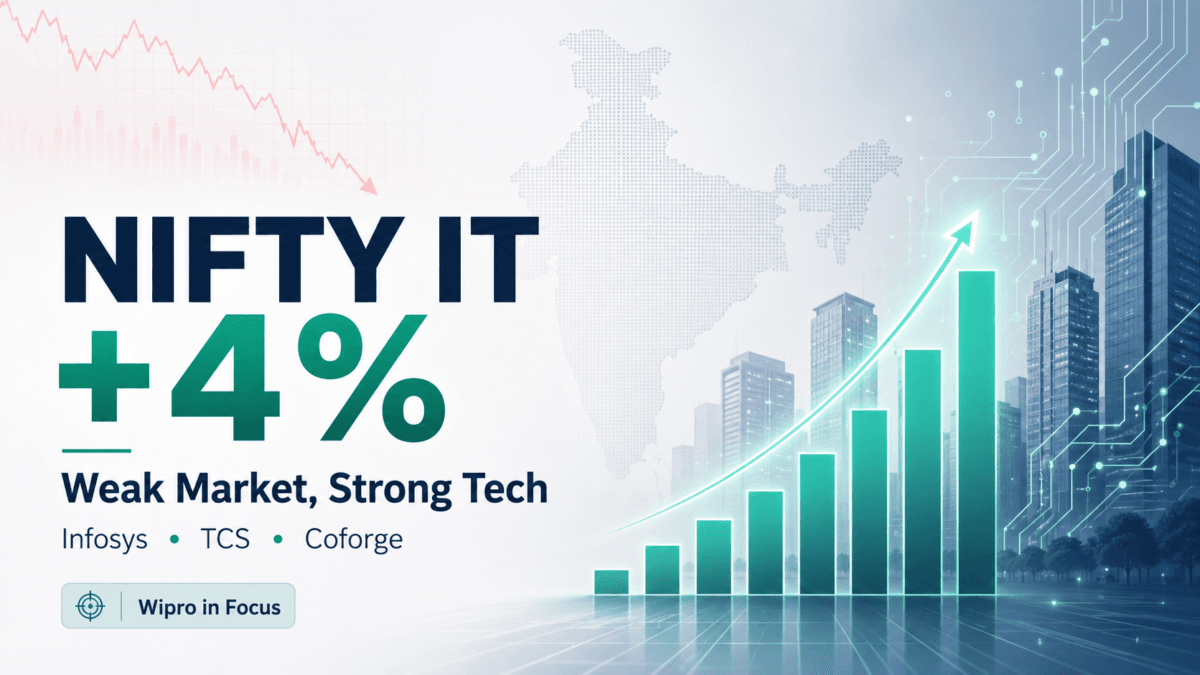
One positive area was information technology. Reuters reported that IT shares rose 2.7%, helped by strong earnings from U.S.-based Snowflake, which lifted sentiment around software-as-a-service, cloud, and IT services companies. IT stocks can sometimes benefit when domestic cyclicals face pressure, especially if global technology sentiment is positive. However, the sector also depends on global demand, currency trends, and client spending patterns.
What Investors Should Watch Next
Crude Oil Direction
Oil is the biggest external variable for Indian markets in this setup. If Brent remains near the $90–$100 range, investors may become more cautious about inflation, corporate margins, and the current account impact. Reuters quoted an SBICAPS Securities analyst warning that sustained crude prices between $90 and $100 per barrel could create risks for FY27 earnings estimates if the Iran conflict is not resolved soon.
RBI Policy Commentary
The Reserve Bank of India’s policy decision is another key trigger. Reuters reported that investors were awaiting the RBI’s monetary policy decision due Friday, with economists expecting rates to remain unchanged, though many expected at least one increase by year-end because of oil prices and rupee pressure. Markets will watch not only the rate decision but also the tone of the commentary. Any hint about inflation, growth, currency stability, or liquidity can influence banks, bonds, the rupee, and rate-sensitive stocks.
Foreign Portfolio Flows
Foreign investor activity remains important after the large MSCI-linked outflow. If foreign selling continues, large-cap indices may struggle even if domestic investors remain active. If flows stabilize, banking and large-cap stocks may regain support.
Practical Tips for Readers Following This Market
Do Not Read the Opening as the Final Trend
The June 1 session showed that an early gain can reverse later. Opening moves are useful, but they should be read with crude oil, rupee movement, foreign flows, and sector participation.
Watch Banks and Oil Together
For Indian markets, banking strength and oil pressure often pull sentiment in opposite directions. If banks rise while crude also rises, the market may stay choppy rather than clearly bullish.
Focus on Quality, Not Just Momentum
In uncertain markets, investors often rotate into large-cap companies with strong balance sheets, stable earnings, and better pricing power. Short-term rallies in weaker stocks may not last if macro pressure increases.
Avoid Overreacting to One Session
One day’s movement does not define the market trend. It is better to track whether the same signals continue over several sessions: crude direction, rupee stability, FPI flows, RBI tone, and sector breadth.
Key Takeaways
The Nifty 50 opened slightly higher on June 1, 2026, supported by banking and domestic-facing stocks.
Rising crude oil prices remained the main concern for Indian markets.
The rupee firmed early but ended nearly flat at 94.99 per U.S. dollar.
Indian benchmarks later reversed lower, with the Nifty 50 closing down 0.7%.
Foreign investor outflows, weak monsoon concerns, and Middle East tensions weighed on sentiment.
IT stocks were a positive exception, while financials weakened later in the day.
Investors are now watching crude oil, RBI policy commentary, rupee movement, and foreign flows.
Conclusion
The Indian market’s June 1 opening showed resilience, but the full session proved that investors remain cautious. Banking strength and a firmer rupee helped the Nifty start on a positive note, yet rising crude oil prices, foreign outflows, monsoon worries, and geopolitical uncertainty soon took control.
This is the challenge facing Indian equities now. Domestic fundamentals may still offer support, especially through banks, infrastructure, and consumption-linked companies. But external risks are too important to ignore. Oil prices, the rupee, and global capital flows can quickly influence market direction.
The broader message is clear: India’s market is not moving on one factor alone. It is balancing domestic strength against global pressure. For investors and readers, the smartest approach is to watch the full picture rather than react only to the opening tick.