Indian equities had a weak session on June 1, 2026, but technology stocks told a different story. While the broader market came under pressure from foreign outflows, crude oil concerns, and weak global cues, the Nifty IT index stood out with a strong rally. Infosys, TCS, Coforge, Persistent Systems, Tech Mahindra, and other IT names attracted buying interest as investors reassessed earlier fears that artificial intelligence could sharply disrupt the software and IT services industry.
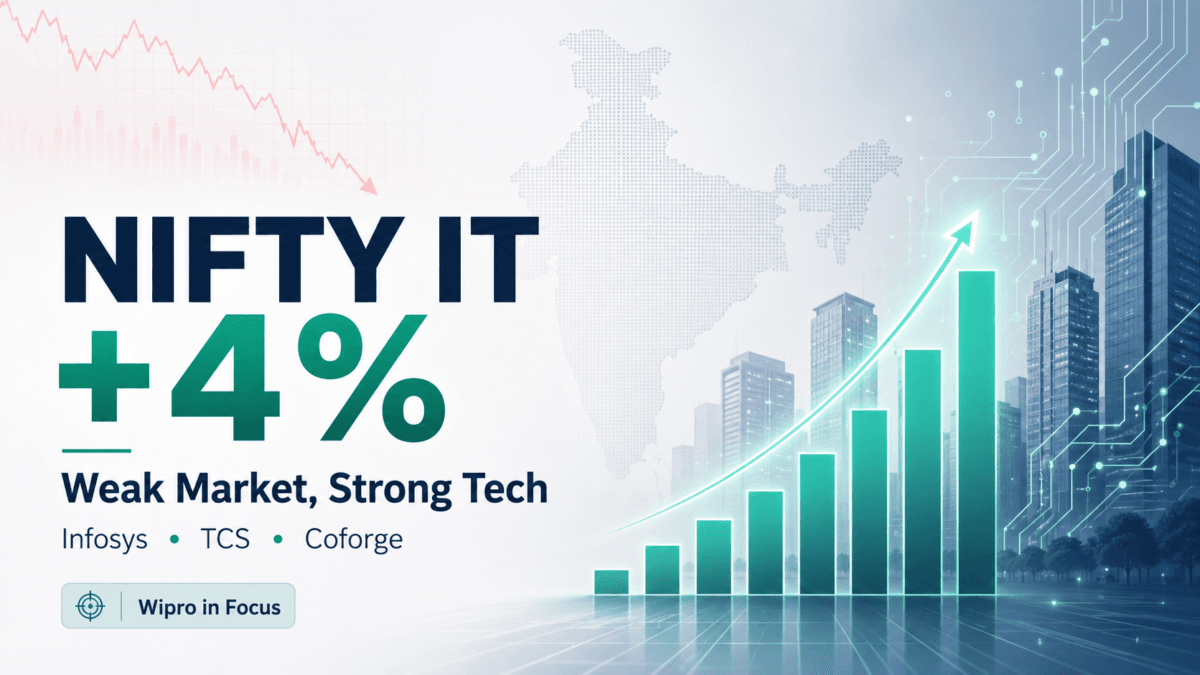
The Nifty IT index rallied as much as 1,104.15 points, or 3.79%, to touch 30,184.30 intraday, with all 10 constituents trading in the green at one point. Infosys rose more than 4%, TCS gained over 3%, Coforge advanced around 5%, and Persistent Systems climbed more than 5.5% during the rally.
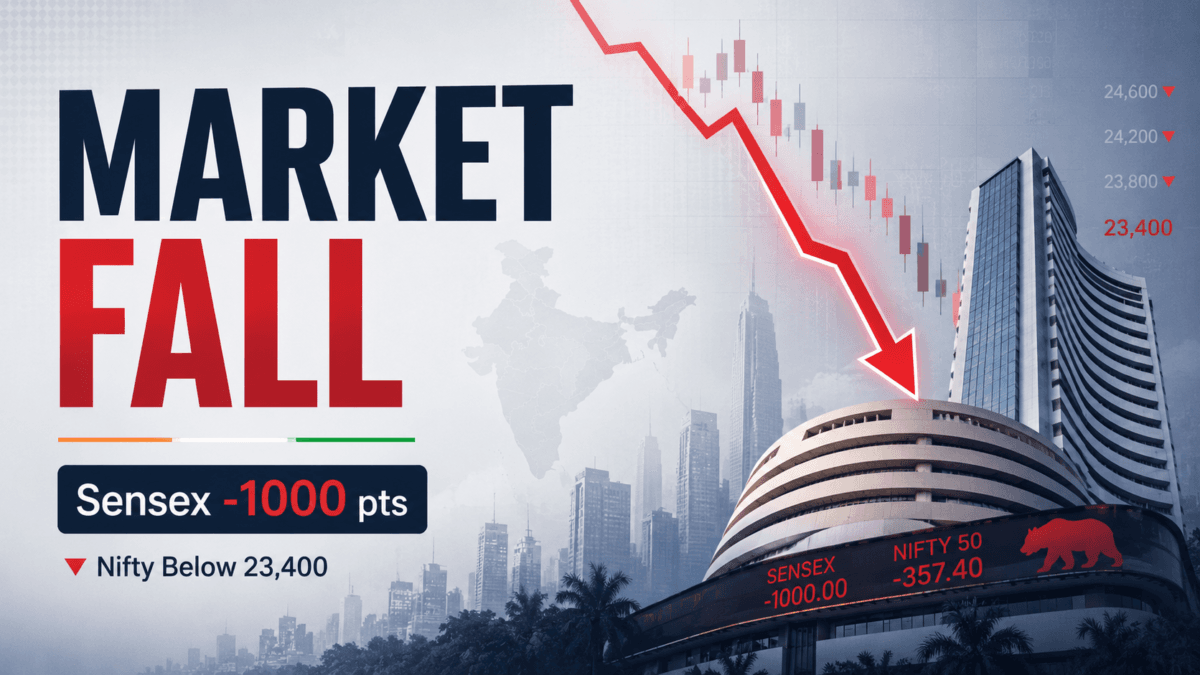
The move was important because it happened in a weak market. The Nifty 50 ended 0.70% lower at 23,382.60, while the Sensex closed 0.68% lower at 74,267.34. Only 10 of the 50 Nifty stocks ended higher, showing how selective the buying was.
Why IT Stocks Rallied in a Weak Market
Global Tech Sentiment Turned Positive
The first major reason was the improvement in global technology sentiment. Indian IT companies earn a large part of their revenue from overseas clients, especially in the United States. So when global software and cloud companies perform well, Indian IT stocks often react positively.
The rally followed upbeat earnings from U.S.-listed software companies such as Snowflake and Okta. Their results helped reduce fears that artificial intelligence would destroy demand for traditional software and cloud services. The iShares Expanded Tech-Software ETF also gained 8% in the previous week and ended May with a 21% monthly rise, its best monthly performance since October 2001. This gave investors a reason to relook at Indian IT stocks after months of caution.
AI Fears Looked Overdone
For several months, IT stocks had been under pressure because investors worried that generative AI tools could reduce demand for coding, testing, software implementation, and support work. Some analysts called this fear a “SaaSpocalypse,” referring to the possibility that AI could hurt Software-as-a-Service companies and the IT firms that work closely with them.
However, the latest market reaction suggests investors are beginning to separate fear from reality. AI may change how software is built and priced, but it does not automatically remove the need for system integration, customization, governance, cybersecurity, cloud migration, and enterprise technology support.
This is where Indian IT companies still have a role. Large enterprises rarely plug in AI tools without support. They need consulting, integration, migration, security, process redesign, and accountability. That keeps Indian IT services relevant even as AI changes the delivery model.
What CLSA Said About Wipro and the IT Sector
CLSA Sees AI as a Change in Monetisation, Not a Demand Collapse
According to reports cited by Upstox, CLSA believes fears of a “SaaSpocalypse” appear overdone. The brokerage reportedly said AI is pushing software companies from seat-based pricing toward consumption-based pricing, but it is not necessarily damaging underlying demand. CLSA also noted that guidance and earnings-per-share trends across SaaS-linked companies remain strong.
This is an important distinction. If AI only changes pricing models, the sector can adapt. But if AI destroys demand, the earnings outlook would be much more serious. CLSA’s view appears closer to the first scenario: disruption is real, but not necessarily destructive.
Wipro Has the Highest SaaS Exposure Among Large-Cap IT Stocks
CLSA also reportedly said that among large-cap Indian IT companies, Wipro has the highest SaaS exposure, while Persistent Systems is its preferred mid-cap pick. The brokerage added that IT firms with deep SaaS partnerships should continue to see healthy demand for product engineering and implementation work. This helped bring Wipro into focus. If SaaS spending remains healthy and AI increases the need for implementation and workflow transformation, Wipro’s exposure to this area could be viewed positively by investors.
Wipro’s ServiceNow Partnership Added to the Buzz
Agentic AI Became a Key Theme
Wipro had already attracted attention after expanding its partnership with ServiceNow. The company announced on May 28, 2026, that it would integrate Wipro Intelligence with the ServiceNow AI Platform to embed agentic AI workflows across core enterprise functions such as IT, human resources, procurement, and cybersecurity.
This partnership matters because “agentic AI” is becoming a major enterprise technology theme. Unlike basic automation, agentic AI is designed to take actions across workflows, coordinate tasks, and support business processes with greater autonomy. For IT services firms, this creates both a challenge and an opportunity. The challenge is that AI may reduce some routine work. The opportunity is that companies will need expert partners to implement AI safely, connect it with existing systems, and ensure governance.
Wipro Shares Reacted Positively
Reuters reported that Wipro shares rose as much as 4% on May 29 after the ServiceNow announcement. Wipro’s American Depositary Receipt also surged nearly 19% overnight on the NYSE following the partnership announcement. On June 1, Wipro continued to trade positively, although it did not lead the IT rally. Upstox reported that Wipro was up over 1.3% intraday, while Business Today noted the stock gained over 1% as IT stocks supported the market during the day.
Infosys, TCS and Coforge Lead the Sector Mood
Infosys Showed Strong Relative Strength
Infosys was among the top performers in the IT pack. It rose more than 4% intraday during the Nifty IT rally and later remained one of the top Nifty gainers at the close, gaining about 3.6%. The move was significant because Infosys is one of the biggest Indian IT exporters. When a heavyweight like Infosys gains strongly, it gives support to the overall IT index and improves confidence in the sector.
TCS Participated in the Rally
TCS also gained during the session. Upstox reported that TCS was trading over 3% higher during the Nifty IT rally, while closing data showed it ended about 1.6% higher. TCS is often viewed as a sector bellwether. Its movement matters because it reflects investor expectations for large-scale outsourcing, digital transformation, cloud migration, and enterprise technology spending.
Coforge and Persistent Systems Attracted Midcap Interest
Coforge and Persistent Systems were strong performers among mid-tier IT names. Coforge rose around 5% intraday and later closed 2.5% higher among midcap gainers, while Persistent Systems climbed more than 5.5% intraday and closed 3.5% higher. Mid-tier IT companies often move faster than large-cap IT stocks because investors expect stronger growth from specialized services, niche verticals, and focused digital capabilities. However, they can also be more volatile.
Why the Rally Happened Despite Broader Market Weakness
IT Became a Defensive Growth Pocket
When the broader market weakens, investors often look for pockets that have their own positive triggers. On June 1, IT stocks had several: global tech strength, easing AI fears, attractive valuations after earlier declines, and company-specific developments such as Wipro’s ServiceNow partnership. At the same time, other sectors were under pressure. Consumer, auto, financial, and several midcap names declined, while foreign fund outflows and mixed global cues kept the broader market weak.
The Sector Had Already Corrected
Another reason the rally looked sharp is that IT stocks had already faced pressure earlier due to AI disruption fears and weak discretionary technology spending. When sentiment improves after a deep correction, the rebound can be strong because many investors rush to cover short positions or rebuild exposure. This does not mean the sector has entered a guaranteed long-term uptrend. It means the market is now questioning whether the earlier selloff was too harsh.
Practical Tips for Investors Watching IT Stocks
Do Not Treat One Rally as a Full Recovery
A strong sector move is encouraging, but one or two sessions do not confirm a complete turnaround. Investors should watch whether deal wins, revenue guidance, margins, and client spending improve over the next few quarters.
Track U.S. Enterprise Spending
Indian IT companies are highly sensitive to U.S. technology budgets. Strong results from global cloud and software companies can help sentiment, but actual order flows and client decision-making will matter more over time.
Watch AI Partnerships Carefully
AI partnerships are positive only if they convert into revenue, stronger margins, or deeper client relationships. Investors should look beyond announcements and track execution.
Understand Wipro’s SaaS Exposure
CLSA’s view that Wipro has the highest SaaS exposure among large-cap IT companies is useful context, but it should not be treated as a standalone buy signal. Investors should also study Wipro’s growth, margins, deal pipeline, leadership execution, and valuation.
Key Takeaways
Nifty IT rallied nearly 4% intraday on June 1, 2026, even as the broader market closed lower.
Infosys, TCS, Coforge, Persistent Systems, and Tech Mahindra led the IT sector strength.
The rally was supported by positive global software sentiment after strong U.S. tech earnings.
CLSA reportedly said fears of a “SaaSpocalypse” look overdone.
CLSA also noted that Wipro has the highest SaaS exposure among large-cap Indian IT firms.
Wipro’s expanded ServiceNow partnership added to investor interest in agentic AI opportunities.
The broader market remained weak, making the IT sector’s outperformance more notable.
Conclusion
The Nifty IT rally on June 1 stood out because it came on a day when the broader Indian market was under pressure. Investors were not buying everything; they were selectively returning to technology stocks as fears around AI disruption began to look excessive.
Infosys, TCS, Coforge, Persistent Systems, and Tech Mahindra benefited from improving global tech sentiment, while Wipro gained attention because of its SaaS exposure and expanded ServiceNow partnership. CLSA’s view added to the debate by suggesting that AI may reshape pricing and monetisation, but not destroy underlying SaaS demand.
The rally does not remove all risks. Indian IT companies still face challenges from slow discretionary spending, pricing pressure, AI-led delivery changes, and global macro uncertainty. But the session showed that investors are willing to reward companies that appear well placed for the next phase of enterprise technology spending.
For now, the message is clear: AI is not only a threat to Indian IT. For companies that adapt quickly, build strong partnerships, and help clients implement AI responsibly, it may also become the next major growth opportunity.