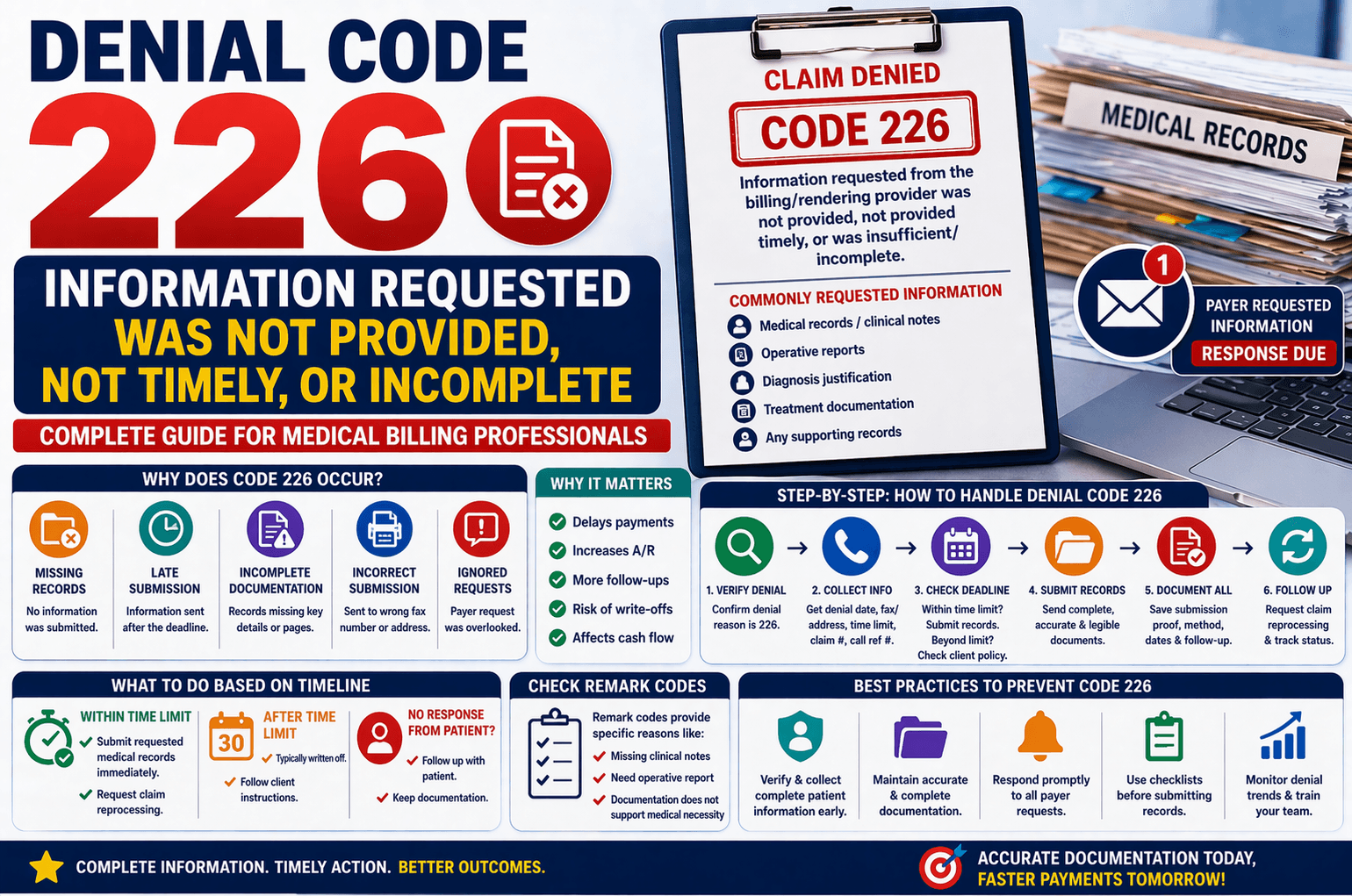
In the complex world of medical billing, claim denials are a common challenge. One such denial is Denial Code 226, which indicates that the payer requested additional information—usually medical records—but did not receive them on time or found them incomplete.
For beginners in healthcare revenue cycle management (RCM), this denial can seem confusing. However, with a clear process and understanding, it becomes manageable and even preventable. This guide breaks down Denial Code 226 in simple terms, explains how to handle it, and provides actionable tips to reduce its occurrence.
What is Denial Code 226?
Denial Code 226 means:
“Information requested from the billing/rendering provider was not provided, not provided timely, or was insufficient/incomplete.”
In simpler terms:
The insurance company asked for additional documentation (usually medical records).
The provider either:
Didn’t send it
Sent it late
Sent incomplete or incorrect information
As a result, the claim was denied.
Why Do Claims Get Denied with Code 226?
Understanding the root causes helps prevent repeat denials. Common reasons include:
- Missing Medical Records
The payer requested documents, but nothing was submitted. - Late Submission
Records were sent after the allowed timeframe. - Incomplete Documentation
Submitted records lacked essential details such as:
Physician notes
Diagnosis justification
Treatment documentation
- Incorrect Submission Method
Sending documents to the wrong fax number or mailing address. - Ignoring Payer Requests
Sometimes requests are overlooked due to workflow gaps.
Step-by-Step Process to Handle Denial Code 226
When working on a denied claim, follow this structured approach:
- Verify the Denial
Start by confirming:
The denial reason is Code 226
Check any associated remark codes for more detail
- Ask for Key Information
During a payer call or review, gather:
Denial date
Medical records submission address or fax number
Time limit for submission
Claim number
Call reference number
These details are critical for proper follow-up.
- Check the Timely Filing Limit
This step is crucial.
Calculate the deadline based on the denial date
Compare it with the current date
Scenario A: Within Time Limit
Send the required medical records immediately
Ensure completeness and accuracy
Scenario B: Time Limit Exceeded
Typically, the claim is written off
However, always verify client instructions
Some clients may still want records submitted even after the deadline.
- Submit Medical Records Correctly
Ensure:
All requested documents are included
Documents are clear and legible
Correct patient and claim details are attached
Submission is done via the correct channel (fax/mail/portal)
- Document Everything
Maintain proper records of:
Submission date
Method used (fax, mail, portal)
Confirmation receipt
Call reference numbers
This helps in future follow-ups or appeals.
Importance of Remark Codes
Denial Code 226 often comes with remark codes that provide additional details.
For example:
Missing operative report
Need for clinical notes
Documentation doesn’t support medical necessity
Always review remark codes carefully—they may change how you handle the denial.
Best Practices to Avoid Denial Code 226
Prevention is always better than rework. Here are some proven strategies:
Maintain Proper Documentation
Ensure all patient records are:
Complete
Accurate
Easily accessible
Respond Quickly to Payer Requests
Track all incoming requests
Set reminders for deadlines
Use Checklists
Before submission, verify:
All required documents are included
Correct claim details are attached
Train Staff Regularly
Ensure billing teams understand:
Payer requirements
Submission timelines
Documentation standards
Monitor Denial Trends
Identify patterns in denials
Address root causes proactively
Example Scenario
Let’s simplify with a real-world example:
A claim was submitted for a surgical procedure.
The payer requested operative notes.
The billing team missed the request.
After 30 days, the claim was denied with Code 226.
Resolution:
The team checks the denial date.
Finds the submission window is still open.
Sends complete operative notes immediately.
Claim gets reprocessed and paid.
Key Takeaways
Denial Code 226 is related to missing or incomplete medical records
Always verify denial details and timelines
Timely submission is critical
Remark codes provide deeper insight
Strong documentation and workflow prevent future denials
Frequently Asked Questions (FAQs)
- What does Denial Code 226 mean in simple terms?
It means the insurance company asked for additional information, but it was not sent, sent late, or was incomplete. - Can a denied claim with Code 226 be resubmitted?
Yes, if the timely filing limit has not been exceeded, you can submit the required medical records and request reprocessing. - What happens if the time limit is crossed?
Typically, the claim is written off. However, some clients may still request submission, so always confirm. - Where do I send the medical records?
You must obtain the correct fax number, mailing address, or portal details from the payer before submission. - Why are remark codes important with this denial?
Remark codes give specific reasons for denial, helping you send the exact documents needed and avoid repeated errors.
Conclusion:
Denial Code 226 may seem like a routine issue in medical billing, but it highlights a critical aspect of revenue cycle management—timely and accurate documentation.
By following a structured approach—verifying details, meeting deadlines, and submitting complete records—you can significantly improve claim acceptance rates. More importantly, implementing preventive measures ensures smoother workflows and reduced denial volumes over time.
Mastering this denial not only improves efficiency but also strengthens your overall billing expertise.