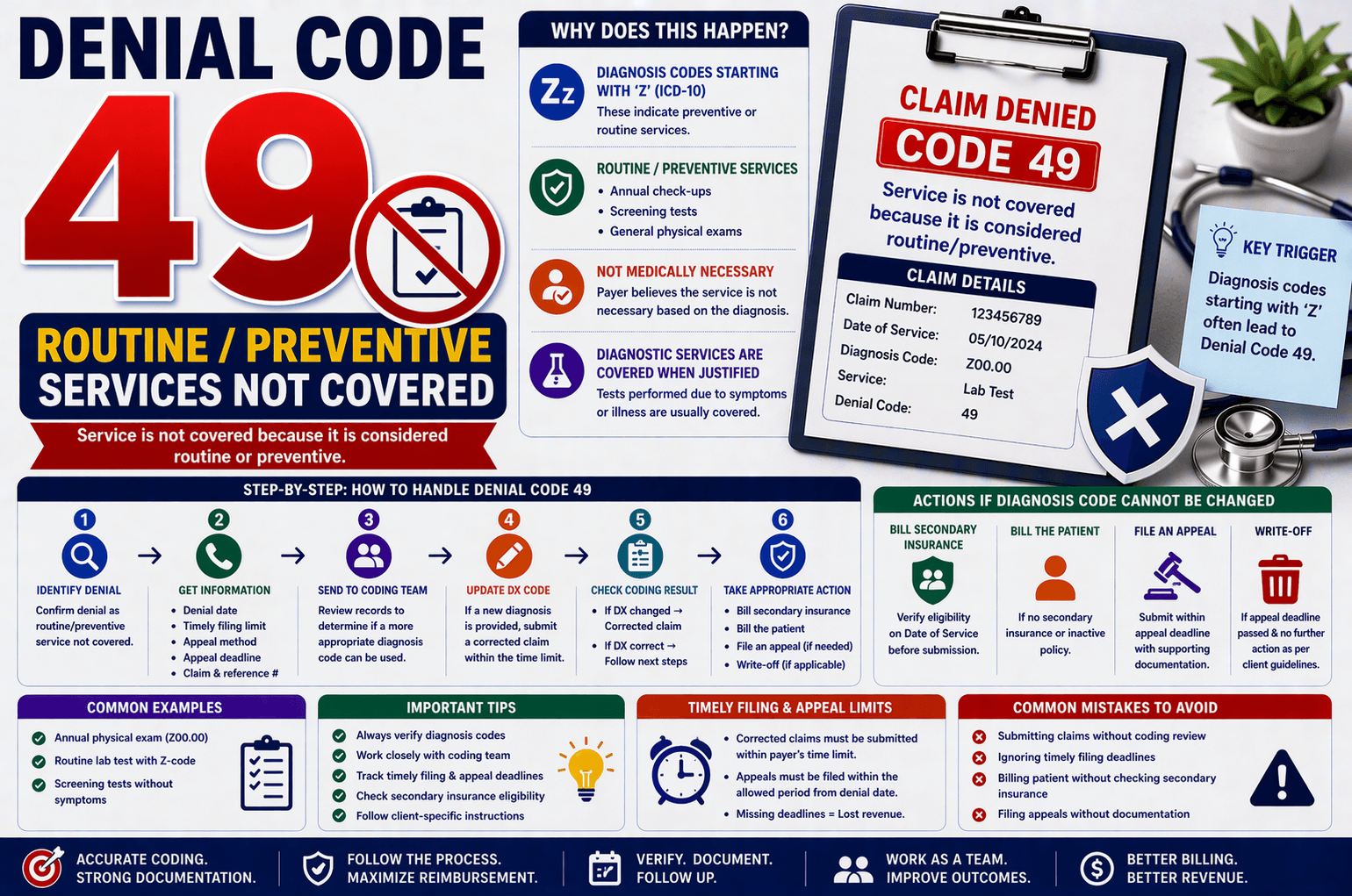
In medical billing, denial codes can be confusing—especially for beginners. One such common denial is Code 49, which indicates that a service is not covered because it is considered routine or preventive. This often happens when claims are submitted with diagnosis codes that signal routine check-ups rather than medical necessity.
Understanding why this denial occurs—and how to handle it effectively—is essential for anyone working in revenue cycle management (RCM), medical billing, or healthcare administration. This guide breaks down Denial Code 49 in simple terms and provides practical steps to resolve it.
What is Denial Code 49?
Denial Code 49 typically means:
The service is not covered because it is a routine/preventive exam or a diagnostic/screening procedure performed along with a routine exam.
Key Trigger
Diagnosis codes starting with “Z” (ICD-10 codes)
These codes usually indicate:
Preventive checkups
Screening procedures
Routine health evaluations
Example
A patient visits for an annual check-up (Z00.00 – general exam).
A lab test is performed during the visit.
The insurance may deny the lab test as non-covered routine service.
Why Does This Denial Occur?
Insurance companies typically distinguish between:
- Preventive Services
Routine checkups
Annual physical exams
Screening tests without symptoms
Often not covered or covered differently depending on the plan.
- Diagnostic Services
Tests performed due to symptoms or illness
Medically necessary procedures
Usually covered when justified with proper diagnosis codes.
Main Issue
When a routine diagnosis code is used for a service that could be considered diagnostic, the payer denies it under Code 49.
Step-by-Step Call Handling Process
When working on a denied claim, follow this structured approach:
Step 1: Identify the Denial
Confirm that the claim is denied as routine service not covered
Step 2: Gather Key Information
Ask the payer:
What is the denial date?
What is the time limit to submit a corrected claim?
What is the appeal submission method (fax or mailing address)?
What is the appeal filing deadline?
Request:
Claim number
Call reference number
How to Resolve Denial Code 49
- Send to Coding Team
This is the most important step.
The coding team reviews:
Medical records
Documentation
They determine if a more appropriate diagnosis code can be used - Update Diagnosis Code (If Applicable)
If the coding team provides a new diagnosis:
Replace the routine (Z code) with a medical necessity-based code
Submit a corrected claim - Check Filing Timely Limits
Ensure the corrected claim is submitted within the allowed timeframe
If the limit is crossed:
Follow client instructions (some still require submission)
What If the Diagnosis Code is Correct?
Sometimes, the coding team confirms that:
The diagnosis code is correct and cannot be changed.
In this case:
Option 1: Bill Secondary Insurance
Before doing this:
Verify patient eligibility on the date of service (DOS)
Check via:
Payer website
Insurance call
If active:
Submit claim to secondary payer
Option 2: Bill the Patient
If:
No secondary insurance exists
Policy is inactive
The patient becomes financially responsible
Option 3: File an Appeal
Sometimes clients prefer appealing the denial.
Steps:
Calculate appeal deadline from denial date
If within time:
Submit appeal with documentation
If exceeded:
Follow client instructions (some still allow submission)
Option 4: Write-Off
If:
Appeal deadline has passed
No further action is required
Write off the claim as per policy
Important Tips for Handling Denial Code 49
Always Verify Diagnosis Codes
Z-codes often trigger denials
Ensure medical necessity is documented
Communicate with Coding Team
Never assume a diagnosis change
Always confirm with certified coders
Track Timely Filing Limits
Corrected claims and appeals have strict deadlines
Check Secondary Coverage Carefully
Avoid unnecessary patient billing
Verify eligibility thoroughly
Follow Client-Specific Instructions
Some clients:
Allow late appeals
Prefer appeals over patient billing
Common Mistakes to Avoid
Submitting corrected claims without coding validation
Ignoring timely filing deadlines
Billing patients without checking secondary insurance
Filing appeals without proper documentation
Assuming all preventive services are covered
FAQs
- What does Denial Code 49 mean in simple terms?
It means the insurance company considers the service routine or preventive, and therefore not covered under the patient’s plan. - Why do diagnosis codes starting with “Z” cause denials?
Z-codes indicate routine or preventive care, which many insurance plans either do not cover or cover under specific conditions. - Can Denial Code 49 be corrected?
Yes, if a medically necessary diagnosis is identified by the coding team, the claim can be corrected and resubmitted. - What if the diagnosis code cannot be changed?
Then you may:
Bill secondary insurance
Bill the patient
File an appeal (if applicable) - How important are timely filing limits?
Very important. Missing deadlines can result in:
Permanent denial
Write-off of the claim
Conclusion:
Denial Code 49 is a common but manageable issue in medical billing. It usually arises when services are billed under routine or preventive diagnosis codes, especially those starting with “Z.” The key to resolving this denial lies in accurate coding, timely action, and proper verification of insurance coverage.
By following a structured workflow—reviewing with the coding team, correcting claims when possible, and handling appeals or patient billing appropriately—you can significantly reduce revenue loss and improve claim success rates.
For beginners, mastering this denial is a strong step toward becoming proficient in medical billing and revenue cycle management.