
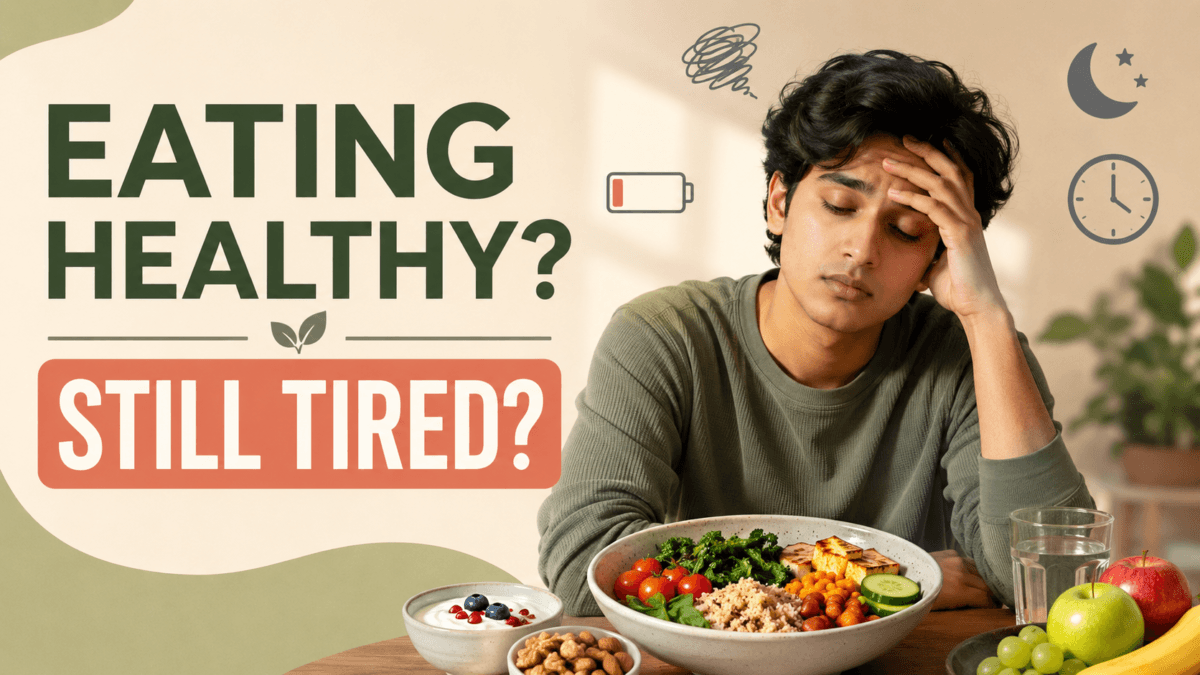
Many young Indians are trying to eat better today. They choose salads, oats, smoothies, millet meals, brown rice, fruit bowls, and homemade food. Yet, a common complaint remains: “I eat healthy, but I still feel tired all the time.”
This can feel frustrating because healthy food is supposed to improve energy. But tiredness is rarely caused by food alone. Your energy depends on sleep, meal timing, protein intake, stress, movement, hydration, sunlight, and hidden nutrient gaps. A diet may look healthy on the outside but still miss what your body actually needs.
Why “Healthy Eating” May Still Leave You Tired
Your Meals May Be Too Light
Many young people confuse healthy eating with eating very little. A fruit bowl for breakfast, salad for lunch, and soup for dinner may sound clean, but it may not provide enough calories, protein, or healthy fats.
When the body does not get enough fuel, tiredness, headaches, cravings, poor focus, and irritability can follow. This is especially common among students, office workers, and people trying to lose weight quickly. A better meal should include protein, fiber-rich carbohydrates, and some fat. For example, poha with peanuts, curd, and fruit is more filling than plain fruit alone.
Protein Intake May Be Low
Protein is important for muscle repair, satiety, and steady energy. Many Indian diets are rich in rice, roti, poha, upma, and dosa, but may be low in dal, paneer, eggs, curd, fish, chicken, soy, or sprouts.
The 2024 Dietary Guidelines for Indians by ICMR-NIN recommend a balanced diet with variety across food groups, including pulses, dairy, vegetables, fruits, cereals, and protein-rich foods. Add protein to every meal. Simple options include dal with rice, curd with paratha, eggs with toast, paneer with roti, chana salad, tofu stir-fry, or sprouts with vegetables.
Hidden Nutrient Gaps That Can Reduce Energy
Iron, B12, and Folate Matter
You can eat home-cooked food and still have low iron, vitamin B12, or folate. These nutrients support healthy red blood cells and oxygen transport. When they are low, fatigue, weakness, dizziness, shortness of breath, and poor concentration may occur.
The World Health Organization notes that lack of iron, folate, vitamin B12, and vitamin A can contribute to anaemia, which may cause fatigue and weakness.
Young women with heavy periods, vegetarians, people with digestive issues, and those who skip meals may be at higher risk. A blood test can help confirm the issue instead of guessing.
Vitamin D Can Be Low Even in Sunny India
Many young Indians spend most of the day indoors, travel in covered vehicles, work on screens, and avoid direct sunlight. This can affect vitamin D levels.
Low vitamin D may be linked with body aches, low mood, muscle weakness, and tiredness. Food alone may not always be enough, so testing and medical advice are useful when symptoms continue.
Lifestyle Reasons Behind Constant Tiredness
Poor Sleep Quality
Eating well cannot replace sleep. Many young Indians sleep late because of phones, OTT content, gaming, studying, work calls, or scrolling. Even seven hours in bed may not feel refreshing if sleep is disturbed. Try keeping a fixed sleep time, reducing screens before bed, avoiding heavy late dinners, and limiting caffeine after evening.
Too Much Caffeine and Not Enough Water
Tea, coffee, and energy drinks may help for a short time, but overuse can disturb sleep and increase anxiety. Dehydration can also make you feel dull and sleepy. Drink water regularly and include fluids like buttermilk, lemon water without excess sugar, coconut water, or clear soups when suitable.
Sitting Too Much
A person can eat healthy but still feel tired if they sit for ten hours a day. Long sitting can reduce circulation, make muscles stiff, and lower overall energy. Light movement helps. Walking after meals, stretching during work breaks, using stairs, or doing simple strength training can improve daily energy.
Practical Tips
Build an Energy-Supporting Plate
Use this simple method: half the plate vegetables, one quarter protein, and one quarter whole grains or millets. Add curd, nuts, seeds, or a little healthy fat for balance.
Do Not Skip Meals Regularly
Skipping breakfast or lunch may seem productive, but it often leads to evening overeating and low energy. Keep easy options ready, such as boiled eggs, roasted chana, curd, fruit with nuts, sprouts, or paneer rolls.
Get Basic Health Checks
If tiredness continues for weeks, consider checking haemoglobin, ferritin, vitamin B12, vitamin D, thyroid function, and blood sugar after speaking with a doctor.
Key Takeaways
Healthy food can still be incomplete if it lacks enough calories, protein, iron, B12, folate, or vitamin D.
Sleep, stress, hydration, sunlight, and movement are just as important as diet.
Extreme dieting can make fatigue worse.
Persistent tiredness should not be ignored, especially with dizziness, weight changes, hair fall, low mood, or breathlessness.
Conclusion
Young Indians may feel tired despite eating healthy because energy is built from many habits, not one perfect meal. A truly healthy routine includes balanced food, enough protein, proper sleep, regular movement, sunlight, hydration, and timely medical checks when needed.
Instead of blaming yourself or following extreme diet trends, look at the full picture. Small, consistent changes can often make daily energy feel more stable, natural, and sustainable.