Insurance plays an important role in protecting individuals and families from financial uncertainty. Whether it is securing your loved ones’ future, managing medical expenses, or building long-term financial stability, the right insurance coverage can make a significant difference. Among the many types of insurance available, life insurance and health insurance are two of the most important. Understanding how they work and choosing the right option can help you make informed financial decisions. This article explains what life insurance is, highlights the benefits of health insurance, and compares term insurance with whole life insurance.
1. What Is Life Insurance?
Life insurance is a financial agreement between an individual and an insurance company. In exchange for regular premium payments, the insurance company provides a payout, known as a death benefit, to the policyholder’s beneficiaries if the insured person passes away during the policy period.
The primary purpose of life insurance is to provide financial support to family members who may depend on the insured person’s income. The payout can help cover daily living expenses, outstanding debts, education costs, and other financial obligations.
Why Life Insurance Matters
Life insurance can offer peace of mind by ensuring that loved ones are financially protected. It is especially valuable for parents, homeowners, business owners, and anyone with financial dependents.
Practical Example
A parent with young children may purchase a life insurance policy to ensure that the family’s financial needs are met if an unexpected event occurs. The insurance benefit can help cover school fees, household expenses, and future financial goals.
2. Benefits of Health Insurance
Health insurance helps cover medical expenses, reducing the financial burden of healthcare costs. It can provide access to quality treatment while protecting personal savings.
Financial Protection
Medical emergencies can be expensive. Health insurance helps cover hospitalization, treatments, surgeries, and other healthcare expenses, reducing out-of-pocket costs.
Access to Better Healthcare
Many health insurance plans provide access to a network of hospitals and healthcare providers, making it easier to receive timely medical care.
Preventive Care Support
Some policies include preventive services such as health checkups, screenings, and vaccinations, helping individuals maintain better health.
Reduced Financial Stress
Knowing that major medical expenses are covered can provide confidence and reduce anxiety during unexpected health situations.
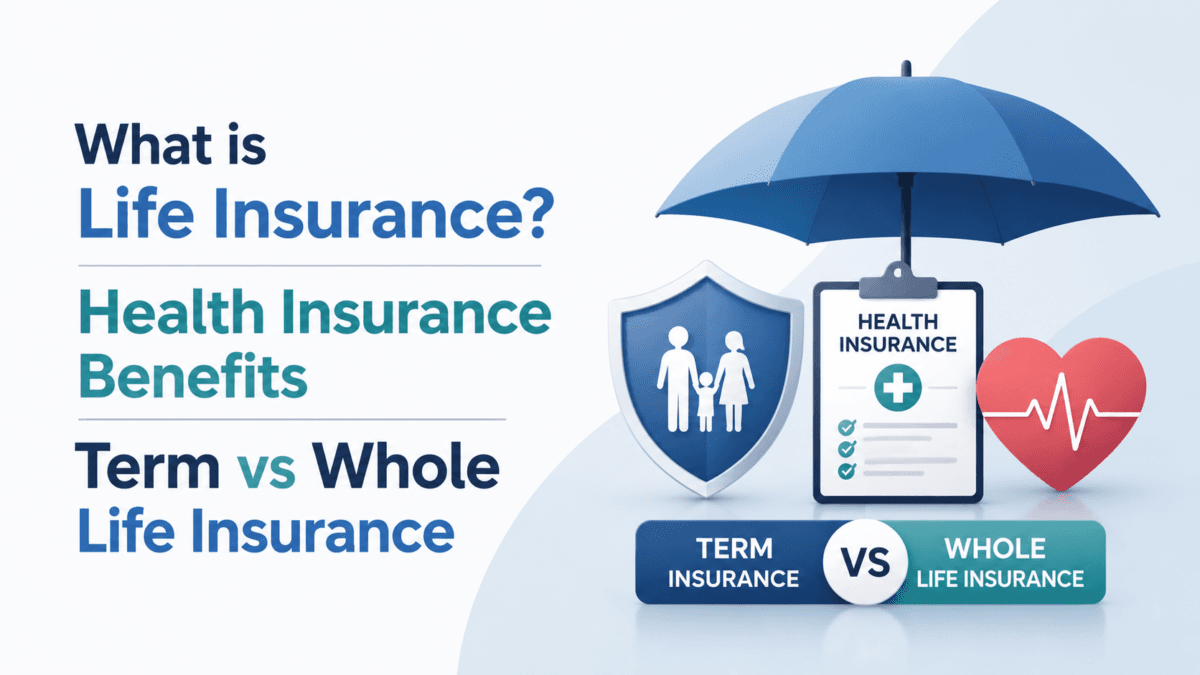
3. Term Insurance vs Whole Life Insurance
Choosing between term insurance and whole life insurance depends on your financial goals, budget, and coverage needs.
What Is Term Insurance?
Term insurance provides coverage for a specific period, such as 10, 20, or 30 years. If the insured person passes away during the term, beneficiaries receive the death benefit.
Advantages of Term Insurance
Generally more affordable than whole life insurance.
Provides high coverage amounts at lower premiums.
Suitable for temporary financial responsibilities.
Challenges
Coverage ends when the term expires.
Does not typically build cash value.
What Is Whole Life Insurance?
Whole life insurance provides lifelong coverage as long as premiums are paid. It also includes a cash value component that can grow over time.
Advantages of Whole Life Insurance
Lifetime protection.
Builds cash value that may be accessed under certain conditions.
Can support long-term financial planning.
Challenges
Higher premiums compared to term insurance.
May be more complex to understand.
Practical Tips for Choosing Insurance
Assess Your Financial Needs
Consider your income, debts, family responsibilities, and future goals before selecting a policy.
Compare Multiple Policies
Review coverage amounts, premium costs, exclusions, and policy features from different insurers.
Review Coverage Regularly
Life circumstances change over time. Periodically reviewing your insurance can help ensure it still meets your needs.
Key Takeaways
Life insurance provides financial support to beneficiaries after the insured person’s death.
Health insurance helps manage medical expenses and reduces financial risk.
Term insurance offers affordable coverage for a specific period.
Whole life insurance provides lifelong protection and cash value growth.
Choosing the right insurance depends on personal financial goals and family needs.
Conclusion
Life insurance and health insurance are essential tools for financial security and risk management. Life insurance helps protect loved ones from financial hardship, while health insurance supports access to medical care and safeguards savings. When selecting life insurance, understanding the differences between term insurance and whole life insurance is crucial. By carefully evaluating your needs, budget, and long-term objectives, you can choose coverage that provides meaningful protection and peace of mind for the future.