
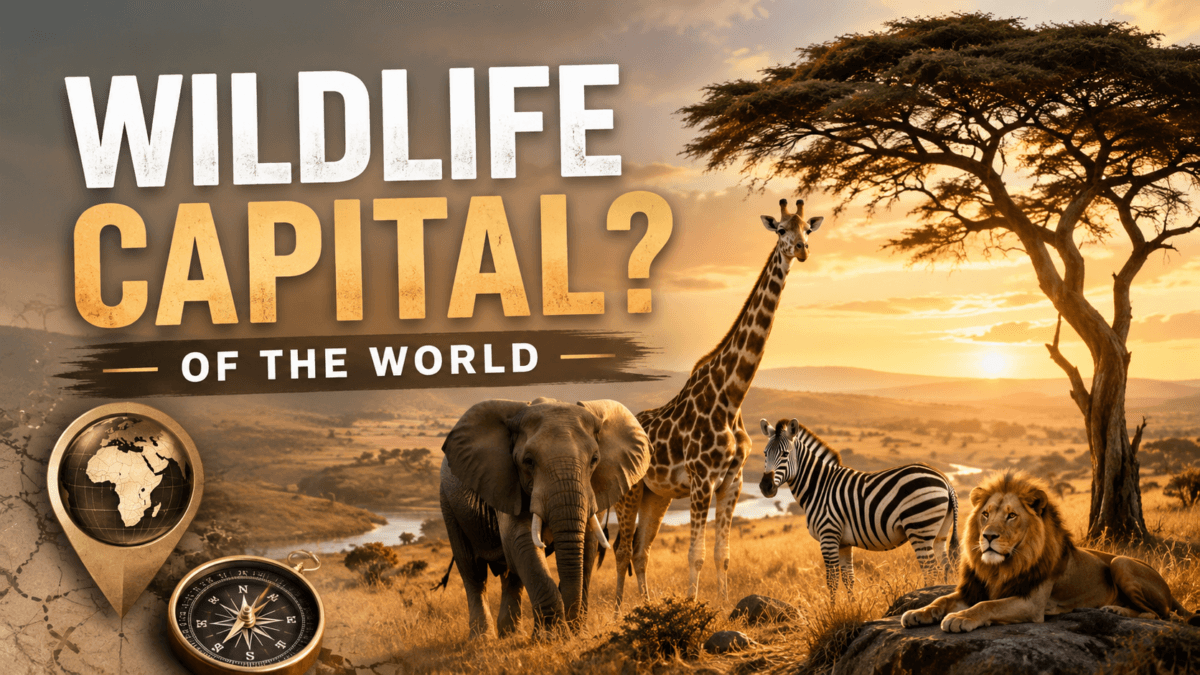
The place known as the Wildlife Capital of the World is Nairobi, Kenya. This title belongs to Nairobi because it offers something rare: a major modern capital city with a real national park just minutes from its busy streets, offices, hotels, and neighborhoods.
In most parts of the world, people travel far from cities to experience wild animals in open landscapes. Nairobi is different. Here, visitors can see lions, rhinos, giraffes, zebras, buffaloes, antelopes, and many bird species with the city skyline in the background. Nairobi National Park sits about 8 kilometers from Nairobi’s central business district, creating one of the most unusual urban-wildlife contrasts on Earth.
This is why Nairobi’s nickname is not just a tourism slogan. It reflects a real relationship between wildlife, conservation, city growth, and Kenya’s global safari identity.
Why Nairobi Is Called the Wildlife Capital of the World
A National Park Beside a Capital City
Nairobi is widely regarded as the Wildlife Capital of the World because Nairobi National Park sits directly beside the city, giving visitors a safari experience without a long journey into the countryside. NDTV notes that Nairobi’s rare combination of a thriving national park beside its skyline is the reason behind this reputation.
The park covers 117 square kilometers, according to the Kenya Wildlife Service. That may be small compared with huge reserves such as the Maasai Mara or Serengeti, but its location makes it extraordinary. It is not a zoo, theme park, or artificial wildlife display. It is a protected savanna ecosystem where wild animals live in natural surroundings.
Wildlife With a Skyline View
One of the most memorable things about Nairobi National Park is the visual contrast. A visitor may see zebras grazing, giraffes walking, or lions resting while high-rise buildings appear in the distance. That image captures Nairobi’s special identity: a city where modern development and wild Africa exist side by side.
This contrast also makes Nairobi important for education. People who may never visit a remote safari reserve can still experience wildlife close to the city. For schoolchildren, tourists, researchers, and local residents, the park becomes a living classroom.
Nairobi National Park: The Heart of the Title
Rich Wildlife in a Compact Area
Nairobi National Park is home to a wide range of species. The Kenya Wildlife Service lists animals such as buffalo, giraffe, lion, leopard, baboon, zebra, wildebeest, and cheetah, along with about 100 mammal species and 400 migratory and endemic bird species.
The park is also known for rhino conservation. KWS describes it as a thriving rhino sanctuary and one of Kenya’s successful rhino sanctuaries. This is important because rhinos face serious threats in many parts of Africa due to poaching and habitat pressure.
A Historic Conservation Area
Nairobi National Park was Kenya’s first national park, established in 1946. Britannica describes it as lying about 8 kilometers south of Nairobi and covering 45 square miles, or 117 square kilometers.
This history matters because Nairobi National Park represents an early effort to protect wildlife near a growing city. As Nairobi expanded, the park became even more valuable. It now stands as a reminder that conservation should not happen only in remote wilderness areas. Nature also needs space near cities.
What Visitors Can Experience in Nairobi
A Safari Without Leaving the City
For travelers, Nairobi offers a rare advantage: convenience. A visitor can land at the airport, stay in the city, and still enjoy a morning or afternoon game drive. This makes Nairobi especially attractive for people with limited time.
A typical visit may include sightings of giraffes, zebras, antelopes, buffaloes, rhinos, lions, or many bird species. Wildlife sightings always depend on season, time of day, and luck, but the park offers a genuine safari atmosphere close to urban life.
Birdwatching and Photography
Nairobi National Park is also a strong destination for birdwatchers. With more than 400 bird species recorded by KWS, it offers excellent opportunities for spotting raptors, water birds, grassland birds, and migratory species.
For photographers, the park provides a unique background. Wildlife photos with Nairobi’s skyline behind them are not common anywhere else. This is one reason the park is often used to represent the relationship between Africa’s natural heritage and modern urban growth.
Why Nairobi’s Wildlife Identity Matters
It Supports Conservation Awareness
Nairobi’s wildlife reputation helps keep conservation in public discussion. When wild animals live close to a major city, people are regularly reminded that development and nature must be managed carefully.
This is not always easy. Urban growth can create pressure on wildlife corridors, migration routes, and surrounding habitats. Britannica notes that maintaining wildlife in the area depends on migration routes into nearby reserves.
This means Nairobi’s wildlife future depends not only on protecting the park itself, but also on protecting the wider landscape connected to it.
It Strengthens Kenya’s Tourism Appeal
Kenya is already famous for safari tourism, especially destinations such as Maasai Mara, Amboseli, Tsavo, Samburu, and Lake Nakuru. Nairobi adds something different. It gives travelers a first taste of Kenya’s wildlife before they travel deeper into the country.
For many visitors, Nairobi National Park becomes their introduction to African wildlife. It is accessible, scenic, and close to hotels, airports, museums, restaurants, and cultural sites. This combination makes Nairobi more than a transit city. It becomes part of the safari story.
Challenges Facing the Wildlife Capital
Urban Expansion
The biggest challenge is the growth of Nairobi itself. As cities expand, land around protected areas becomes more valuable for housing, roads, industries, and infrastructure. This can reduce open land available for wildlife movement.
Large animals need space. They need feeding areas, breeding areas, water sources, and safe movement routes. If those routes are blocked, wildlife populations may become isolated.
Human-Wildlife Conflict
When wildlife lives near people, conflict can happen. Animals may move close to settlements, roads, or farms. People may fear predators or suffer damage to livestock or property. Conservation must therefore include local communities, not ignore them.
Good planning, education, fencing where necessary, compensation systems, and protected corridors can reduce conflict. Nairobi’s example shows that wildlife conservation near a city is possible, but it requires constant care.
Balancing Tourism and Protection
Tourism brings money and awareness, but too much pressure can harm wildlife. Vehicles, noise, careless behavior, and overcrowding can disturb animals. Responsible tourism is important so that the park remains healthy for future generations. Visitors should follow park rules, avoid feeding animals, keep distance, stay on approved tracks, and respect guides’ instructions.
Practical Tips for Visiting Nairobi National Park
Go Early in the Morning
Wildlife is often more active in the early morning when temperatures are cooler. This is also a good time for photography because the light is softer.
Carry Binoculars and a Camera
The park has open plains, but some animals may be far away. Binoculars help visitors enjoy birds, distant mammals, and smaller details in the landscape.
Do Not Expect Elephants
Nairobi National Park has many famous African animals, but elephants are generally not part of the regular wildlife experience there. KWS notes that the park has four of the Big Five apart from elephants.
Respect Wildlife Space
Even when animals appear calm, they are still wild. Visitors should keep a safe distance, avoid loud noise, and never step out of vehicles unless allowed in designated areas.
Combine the Park With Other Conservation Sites
A Nairobi trip can also include nearby conservation-focused attractions, cultural sites, and museums. This helps visitors understand both wildlife and the broader story of Kenya.
Key Takeaways
The place known as the Wildlife Capital of the World is Nairobi, Kenya.
Nairobi earned this reputation mainly because of Nairobi National Park, a real wildlife park located close to the city center.
Nairobi National Park covers 117 square kilometers and supports about 100 mammal species and more than 400 bird species.
The park is famous for wildlife sightings with Nairobi’s skyline in the background.
It is also an important rhino sanctuary and a major conservation symbol.
Nairobi shows that wildlife conservation can exist near a modern city, but it requires careful planning and protection.
Visitors can enjoy a safari experience without traveling far from the capital.
Conclusion
Nairobi deserves the title Wildlife Capital of the World because it offers a rare meeting point between city life and wild nature. Few places allow people to move from traffic, offices, and hotels to open savanna and large mammals in such a short time.
The city’s identity is shaped by this contrast. Nairobi is not only Kenya’s political and economic capital; it is also a gateway to the country’s wildlife heritage. Nairobi National Park gives residents and visitors a chance to see why conservation matters, not as a distant idea, but as something living right beside the city.
The title also carries responsibility. To remain the Wildlife Capital of the World, Nairobi must continue protecting its park, wildlife corridors, and natural ecosystems. If managed wisely, the city can remain one of the world’s best examples of how urban growth and wildlife conservation can exist together.