Stories have always been one of the simplest yet most effective ways to teach important life lessons. Long before modern educational methods became popular, parents and teachers used short stories to help children understand values such as honesty, kindness, perseverance, and responsibility. These lessons remain relevant today because they address situations that people face throughout life.
What makes moral stories special is their ability to present meaningful messages through relatable characters and simple events. Whether it is a shepherd boy learning the consequences of dishonesty or a hardworking ant preparing for the future, these stories offer wisdom that readers of all ages can apply in daily life.
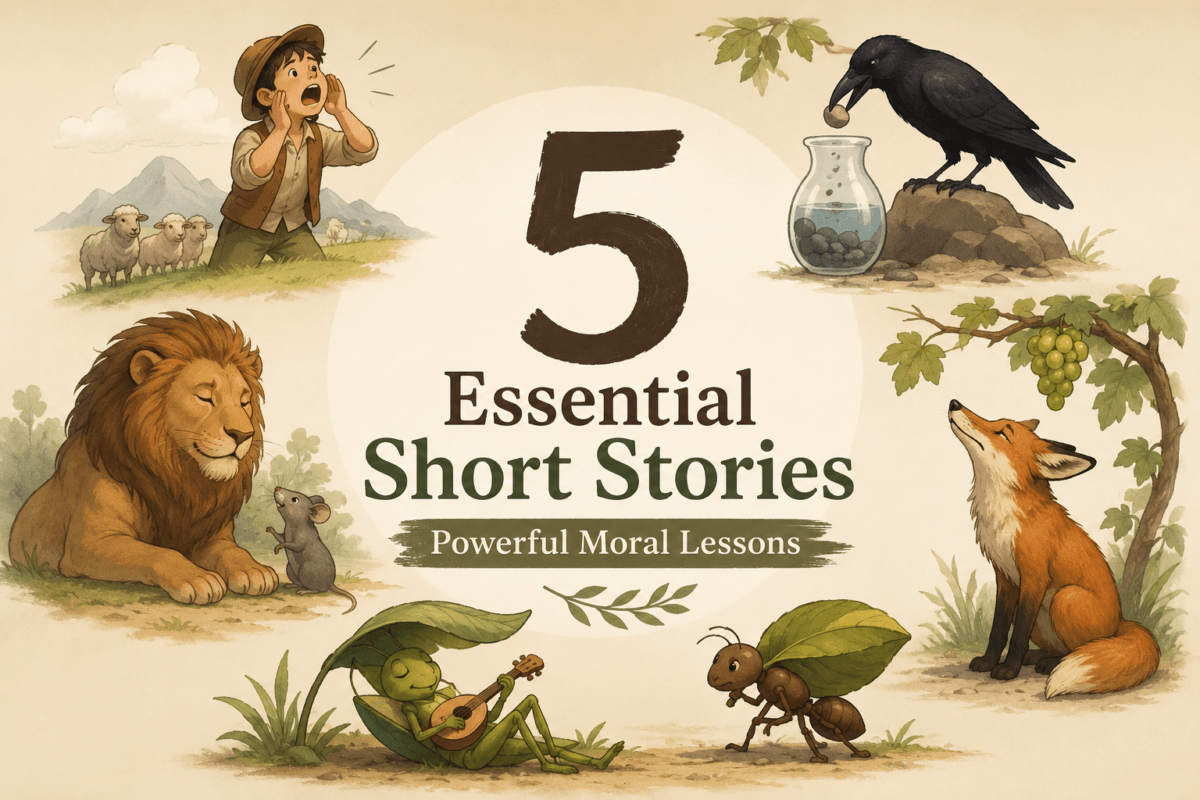
In this article, we will explore five essential short stories that continue to inspire generations with their powerful moral lessons.
1. The Boy Who Cried Wolf
A Lesson About Honesty and Trust
A young shepherd was responsible for looking after a flock of sheep near a village. Finding his daily routine boring, he decided to entertain himself by playing tricks on the villagers.
One day, he shouted that a wolf was attacking his sheep. Hearing his cries, nearby villagers rushed to help. When they arrived, they discovered there was no wolf. The boy laughed and admitted that it was only a joke.
After repeating the same prank several times, the villagers stopped taking his warnings seriously. Eventually, a real wolf appeared and attacked the flock. This time, the boy cried out desperately for help, but nobody believed him. As a result, no one came to assist him.
Moral Lesson
Honesty is the foundation of trust. Once trust is broken, rebuilding it becomes extremely difficult. This story reminds us that lying for temporary amusement can lead to serious consequences when genuine help is needed.
Real-Life Application
In school, work, or personal relationships, people value honesty. Consistently telling the truth helps build credibility and respect.
2. The Thirsty Crow
A Story of Creativity and Determination
On a hot day, a thirsty crow searched tirelessly for water. After flying for a long time, it finally discovered a jug containing a small amount of water.
The crow quickly realized that the water level was too low for its beak to reach. Instead of giving up, it carefully observed the situation and came up with a solution. It collected small pebbles and dropped them into the jug one by one.
As the pebbles accumulated, the water level gradually rose. Soon, the crow was able to drink the water and satisfy its thirst.
Moral Lesson
Persistence and creative thinking can help overcome challenges. Problems often have solutions if we remain patient and determined.
Real-Life Application
Students facing difficult subjects, professionals tackling workplace challenges, or anyone pursuing a goal can benefit from this lesson. Success often comes from finding smart solutions rather than giving up.
3. The Lion and the Mouse
The Power of Kindness
One afternoon, a lion was sleeping peacefully in the forest when a mouse accidentally disturbed him. Angered by the interruption, the lion caught the tiny creature and prepared to punish it.
The frightened mouse begged for mercy and promised to help the lion someday. Amused by the idea that such a small animal could be useful, the lion decided to spare its life.
Later, the lion became trapped in a hunter’s net. Despite its strength, it could not break free. Hearing the lion’s cries, the mouse rushed to help and gnawed through the ropes until the lion escaped.
Moral Lesson
Acts of kindness are never wasted. Even the smallest individuals can make a significant difference when given the opportunity.
Real-Life Application
Treating others with respect and compassion often creates meaningful relationships. Sometimes help comes from unexpected places.
4. The Fox and the Grapes
Learning to Accept Failure
A hungry fox spotted a bunch of ripe grapes hanging from a vine. Determined to eat them, it repeatedly jumped to reach the fruit.
Despite multiple attempts, the grapes remained out of reach. Exhausted and frustrated, the fox finally walked away, convincing itself that the grapes were probably sour and not worth eating anyway.
Moral Lesson
People sometimes criticize or dismiss things they cannot obtain. Instead of making excuses, it is better to accept disappointment honestly and continue improving.
Real-Life Application
Whether it is missing out on a job opportunity, losing a competition, or facing personal setbacks, accepting reality helps us grow stronger and wiser.
5. The Ant and the Grasshopper
Hard Work and Preparation Matter
During the summer, an ant spent its days gathering food and storing it for the future. While the ant worked diligently, a grasshopper spent its time singing, dancing, and relaxing.
The grasshopper often laughed at the ant’s efforts and encouraged it to stop working. However, the ant continued preparing for the colder months ahead.
When winter arrived, food became scarce, and the ground was covered with snow. The grasshopper soon found itself hungry and unprepared. Realizing its mistake, it understood the value of planning and hard work.
Moral Lesson
Preparation and consistent effort create security and success. Ignoring responsibilities today can lead to difficulties tomorrow.
Real-Life Application
Saving money, studying regularly, and planning ahead are practical examples of applying this lesson in everyday life.
Practical Tips for Teaching Moral Lessons Through Stories
Encourage Discussion
After reading a story, ask questions about the characters’ choices and actions. This helps children think critically about the lesson.
Connect Stories to Daily Life
Relate the moral to real-life situations that children may encounter at school, home, or with friends.
Lead by Example
Stories become more meaningful when children see adults practicing the same values in everyday situations.
Make Reading a Habit
Regular storytelling sessions can strengthen reading skills while reinforcing positive values and behavior.
Key Takeaways
- Honesty helps build trust and credibility.
- Determination and creativity can solve difficult problems.
- Kindness often returns in unexpected ways.
- Accepting failure honestly is better than making excuses.
- Hard work and preparation create future success.
- Moral stories provide valuable life lessons in a simple and memorable format.
Conclusion
Short moral stories continue to remain relevant because they teach timeless values through engaging and easy-to-understand narratives. The lessons found in stories such as The Boy Who Cried Wolf, The Thirsty Crow, The Lion and the Mouse, The Fox and the Grapes, and The Ant and the Grasshopper offer practical guidance that applies to everyday life.
These stories remind us that honesty earns trust, perseverance leads to solutions, kindness has lasting value, acceptance encourages growth, and preparation creates opportunities. By sharing and reflecting on such stories, parents, teachers, and readers can help cultivate strong character traits that contribute to personal and social success throughout life.