
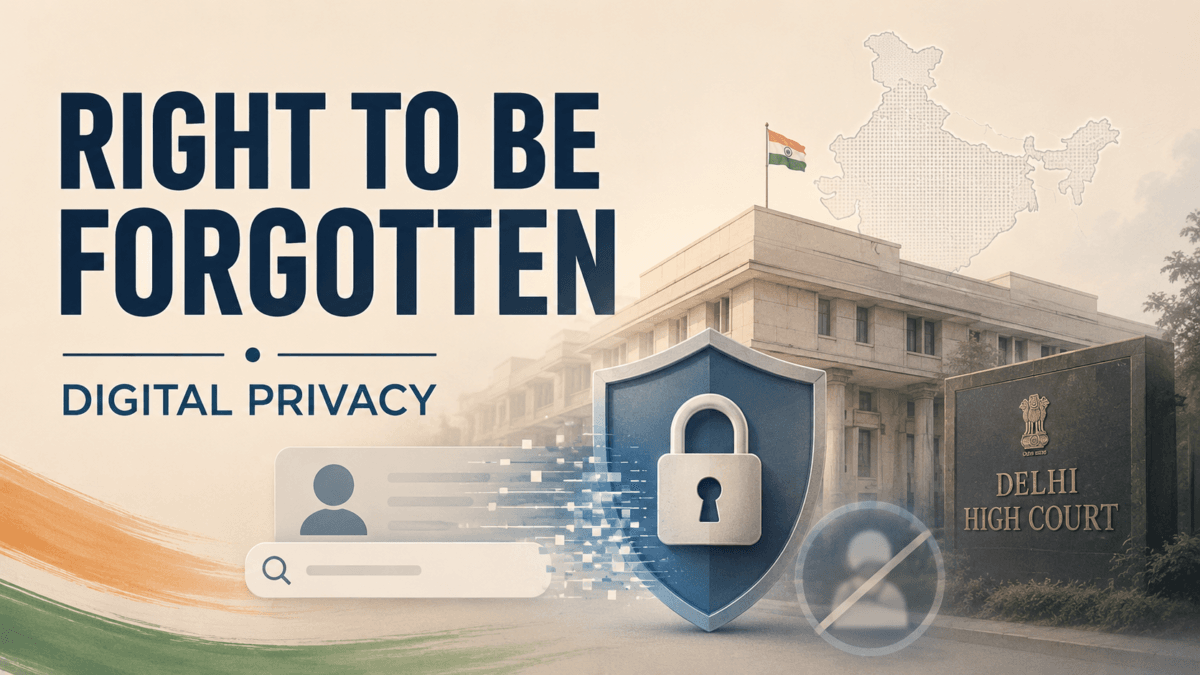
The Delhi High Court’s recent direction to Google and Indian Kanoon has opened an important public conversation about privacy, reputation, and the long life of information on the internet. In a significant ruling, the court recognised the right to be forgotten as part of the fundamental right to privacy under Article 21 of the Constitution. The decision focuses on name-based search results linked to court judgments, orders, and related material available online.
The case matters because online information can remain visible for years, even after a legal matter has ended. A person who has been acquitted, discharged, or involved in a private dispute may still find their name appearing in search results whenever someone looks them up. This can affect job opportunities, family life, business reputation, and personal dignity. The court observed that individuals should not suffer endless reputational harm only because old legal records remain easily searchable in the digital space.
The judgment does not mean that court records will simply disappear. This is an important point. The court drew a difference between deleting records and de-indexing them. De-indexing means a record may not appear through a simple name-based search, but the original material can still remain available through proper legal or purposeful searches. This approach tries to protect personal privacy without fully blocking public access to judicial information.
Indian Kanoon and search engines like Google play a major role in making legal records easy to find. For lawyers, journalists, researchers, and citizens, such access can be useful. But for ordinary individuals whose names appear in sensitive or resolved matters, easy search visibility can become a burden. The ruling attempts to balance both sides: the public’s right to know and an individual’s right to move forward without being permanently judged by search results.
The court also discussed masking personal information in certain cases. Masking means replacing names or personal identifiers with neutral references in publicly available digital records, while keeping complete records safely preserved in court archives. This method can help protect people in matters involving privacy, dignity, matrimonial disputes, acquittals, settlements, or cases where there is no strong continuing public interest in exposing personal identity.
This decision is especially relevant in today’s digital world. Earlier, legal records were not always easy for the average person to find. Now, one quick search can bring up old disputes, accusations, or case details. Even when a person is cleared, the search result may still create doubt in the minds of employers, neighbours, clients, or strangers. That is why the right to be forgotten has become more than a legal idea; it is connected to real human life.
At the same time, the ruling is not a blanket permission to hide every uncomfortable fact. The court made it clear that each request must be examined carefully. Factors such as the nature of the information, its public importance, the person’s role, the age of the record, and the impact on dignity and reputation must be considered. This prevents misuse while still giving genuine cases a path for relief.
For individuals, the practical lesson is simple: digital reputation matters. People who are affected by outdated or unnecessary legal search results may now have a stronger basis to seek removal from name-based search visibility. However, such requests should be made responsibly, with proper legal advice and clear reasons. For platforms, the ruling signals the need to build better systems for privacy-sensitive legal content.
For society, the key takeaway is that justice should not become a permanent digital punishment. If a person has been cleared by law, settled a private matter, or appeared only incidentally in a record, they should not always be forced to carry that result forever in public search engines. At the same time, transparency in courts remains important for democracy and accountability.
In conclusion, the Delhi High Court’s ruling on the right to be forgotten is a meaningful step in India’s privacy journey. It does not erase history, but it asks whether every personal detail must remain easily searchable forever. By directing platforms to address name-based visibility in suitable cases, the court has tried to create a fair balance between open justice and human dignity in the digital age.