
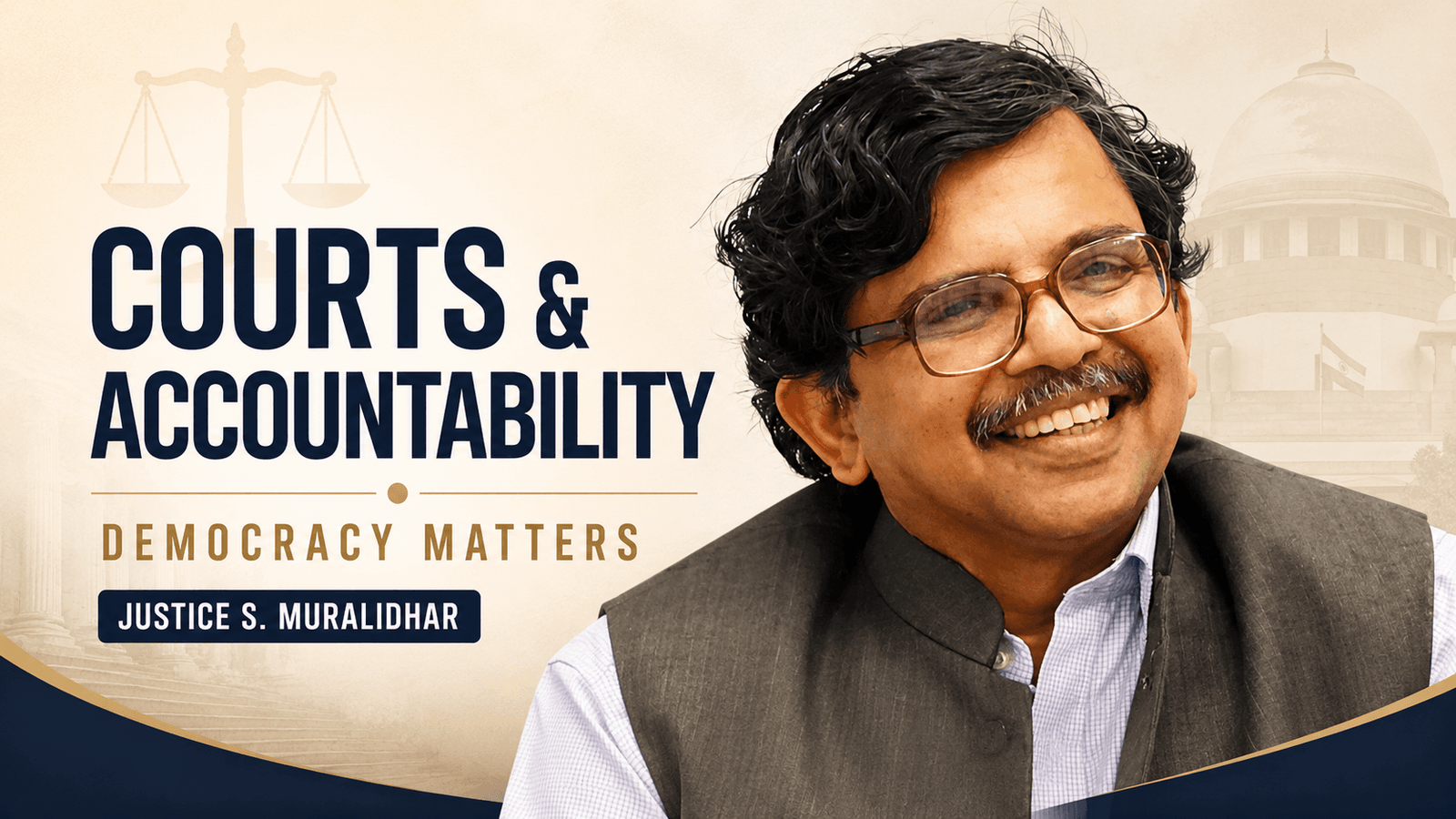
Courts are not only places where disputes are decided. In a constitutional democracy, they also protect people from silence, secrecy, and misuse of power. This idea gained attention after Senior Advocate Dr. S. Muralidhar, former Chief Justice of the Orissa High Court, said that the more judges recognise the duty of constitutional courts to enforce accountability, the better the country will be. He made the remarks during a book launch event in Bengaluru on June 2, 2026.
Why Judicial Accountability Matters
Courts Give Citizens a Voice
A citizen may struggle to get answers from powerful authorities. A complaint may be ignored, a file may remain pending, or a public office may refuse to explain its decision. Courts become important because they can require officials to respond through a legal process.
This does not mean courts should run the government. It means they must ensure that power is exercised within legal limits. When people approach constitutional courts, they often ask one basic question: was this decision legal, fair, and reasonable?
Accountability Protects the Rule of Law
The rule of law means no person or institution is above the law. It also means government action should be open to examination. If public power is used without reasons, records, or responsibility, people lose faith in institutions.
Justice Muralidhar’s message is important because it treats accountability as a core part of justice. A court order asking the State to explain itself may help not only one petitioner but many others facing similar problems.
The Link Between Courts and Democracy
Democracy Needs Questions
Democracy is more than elections. Citizens must be able to question public decisions, seek records, challenge unfair actions, and demand reasons. Dr. Muralidhar also connected accountability with citizens’ ability to obtain answers through courts and the Right to Information mechanism.
Many public interest cases begin because ordinary people, lawyers, journalists, or affected communities ask difficult but necessary questions. Courts can convert those questions into structured legal scrutiny.
Judicial Independence Is Essential
A court can enforce accountability only when it is independent, fearless, and fair. Judges must be able to hear cases involving the State without pressure. At the same time, courts must remain disciplined and transparent. Judicial power should not become unchecked power. The judiciary’s strength comes from public trust, reasoned decisions, ethical conduct, and constitutional limits.
Real-World Value of Court-Led Accountability
When Authorities Must Respond
Dr. Muralidhar noted that government machinery often responds when questions are raised in court proceedings. Once a matter enters court, authorities may have to file affidavits, produce records, explain delays, and justify decisions.
For citizens, this can be meaningful. A court case may help secure pension benefits, environmental protection, police action, access to information, fair recruitment, or protection from arbitrary action. Even when final relief is limited, the process may bring hidden facts into view.
Lawyers and Citizens Also Have Duties
Accountability does not depend on judges alone. Lawyers must present facts honestly and avoid careless litigation. Petitioners must approach courts with clean hands. Civil society must use legal remedies responsibly. When all participants act seriously, courts become a space where power can be questioned lawfully and respectfully.
Practical Tips
Citizens facing official inaction should keep written records, including applications, receipts, emails, notices, and replies. Good documentation makes any later legal step stronger.
Before litigation, people should use available remedies where possible. These may include departmental complaints, grievance portals, RTI applications, legal notices, or statutory appeals. Anyone considering legal action should consult a qualified lawyer or legal aid service, especially when deadlines or urgent protection are involved.
Key Takeaways
Courts make public authorities answerable.
Accountability is essential to the rule of law.
Democracy requires questions beyond elections.
Judicial independence must be matched with responsibility.
Proper records help citizens seek justice effectively.
Conclusion
Justice S. Muralidhar’s statement is a reminder that courts are not passive institutions. Their duty is not limited to deciding private disputes. They must also protect the public’s right to lawful, reasoned, and accountable governance. When judges understand this responsibility, citizens gain confidence that power can be questioned. That confidence is one of the strongest foundations of democracy.