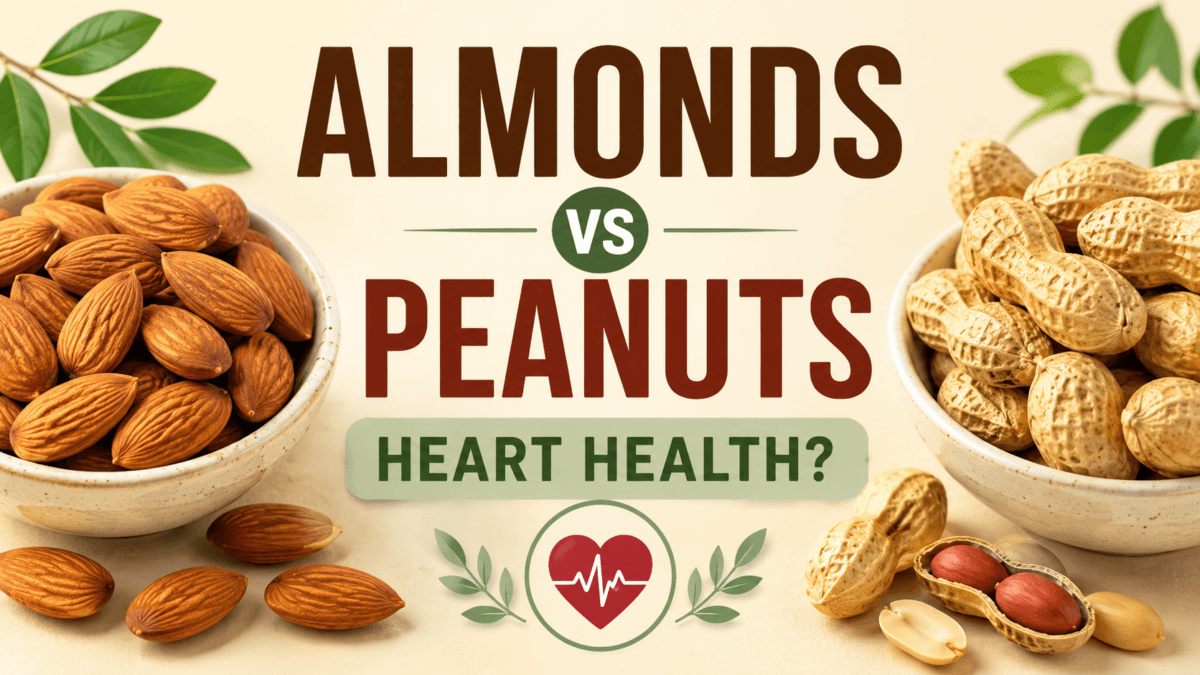
Almonds and peanuts are two of the most popular snacks for people who want something crunchy, filling, and healthier than chips or sweets. Both are easy to carry, easy to add to meals, and rich in nutrients that can support heart health.
But which one is better for your heart? The honest answer is that both almonds and peanuts can be heart-friendly when eaten in the right way. Almonds may have a slight edge for certain nutrients, while peanuts are affordable, protein-rich, and still very useful for a heart-conscious diet.
Almonds vs. Peanuts: The Basic Difference
Almonds Are Tree Nuts
Almonds are true tree nuts. They are known for their healthy fats, fibre, vitamin E, magnesium, and satisfying crunch. These nutrients make almonds a strong choice for people who want to support cholesterol control and overall heart wellness.
Peanuts Are Legumes, But Nutritionally Similar
Peanuts are technically legumes, like beans and lentils, but nutritionally they are often grouped with nuts. Mayo Clinic notes that peanuts are also heart-healthy, even though they are not true nuts.
This means peanuts should not be dismissed as a “cheaper” or lower-quality option. They can still be part of a balanced heart-friendly eating pattern.
Why Both Can Support Heart Health
They Contain Healthy Fats
Both almonds and peanuts contain unsaturated fats. These fats are considered better for heart health than saturated fats when used in place of less healthy snack options.
Mayo Clinic explains that nuts contain unsaturated fats, plant protein, fibre, plant sterols, and other nutrients that may help improve cholesterol and blood vessel health.
They Help Replace Less Healthy Snacks
A handful of nuts can be more satisfying than biscuits, fried snacks, or sugary foods. Because nuts contain fat, protein, and fibre, they can help you feel full for longer. This matters because heart health is not only about one food. It is also about what that food replaces in your daily routine.
Where Almonds May Have the Advantage
Better for Vitamin E and Magnesium
Almonds are often valued for their vitamin E and magnesium content. Vitamin E acts as an antioxidant, while magnesium supports normal muscle, nerve, and heart function. If your goal is to choose a nut with a strong micronutrient profile, almonds are an excellent option.
Good for Cholesterol-Friendly Snacking
Almonds fit well into a diet focused on improving snack quality. They are especially useful when eaten plain, unsalted, or dry-roasted.
For example, replacing an evening packet of fried snacks with a small handful of almonds can reduce your intake of refined carbs, excess salt, and unhealthy fats.
Where Peanuts May Be the Better Choice
More Budget-Friendly
Peanuts are usually cheaper than almonds, making them easier to eat regularly. A heart-healthy habit only works if it is realistic. For many families, peanuts are more practical than expensive nuts.
Roasted peanuts, boiled peanuts, or homemade peanut chutney can be simple ways to add them to meals.
Useful Source of Plant Protein
Peanuts provide plant-based protein and can help make snacks more filling. Peanut butter can also be useful, but only when it is made without excess sugar, salt, or added oils. The American Heart Association recommends comparing nut butter labels and choosing options lower in sodium, with no added tropical oils or sugars when possible.
Practical Tips
Choose Unsalted Versions
Salted almonds or peanuts can increase sodium intake. For heart health, plain, unsalted, or lightly roasted options are better. Mayo Clinic advises choosing unsalted or unsweetened nuts because added salt or sugar may reduce the heart-health benefits.
Control Portion Size
Nuts are nutritious, but they are calorie-dense. A small handful is enough for most people.
The American Heart Association describes one serving as a small handful, or about 1 ounce of whole nuts, or 2 tablespoons of nut butter.
Use Them in Meals
Add almonds to oats, curd, salads, or fruit bowls. Add peanuts to poha, upma, chutney, stir-fries, or sprouts. This makes meals more filling without needing complicated recipes.
Key Takeaways
Almonds and peanuts can both support heart health.
Almonds may be better for vitamin E and magnesium.
Peanuts are affordable, protein-rich, and practical for daily use.
Unsalted and unsweetened versions are the healthiest choices.
Portion control matters because both are high in calories.
Conclusion
So, which is better for heart health: almonds or peanuts? Almonds may have a slight nutritional edge, but peanuts win for affordability and everyday practicality. The best choice depends on your budget, taste, and eating habits.
For most people, the smartest approach is not to choose only one. Eat almonds some days and peanuts on others. Keep the portions moderate, avoid salty or sugary versions, and use them to replace less healthy snacks. When eaten this way, both almonds and peanuts can be valuable parts of a heart-friendly diet.