
Cities are heating up, and people can feel it every day. A short walk to the bus stop can feel exhausting. A shaded side of the street can feel comfortable, while the open side feels harsh and burning. This is not imagination. Roads, concrete, glass, rooftops, and walls absorb heat during the day and release it slowly, making cities warmer than nearby rural areas.
Trees and greenery are often seen as the simplest solution. Plant more trees, make more parks, and the city becomes cooler. That idea is partly true, but new research shows the answer is more careful than that. Greenery can reduce outdoor heat stress dramatically, but only when the right plants are placed in the right design.
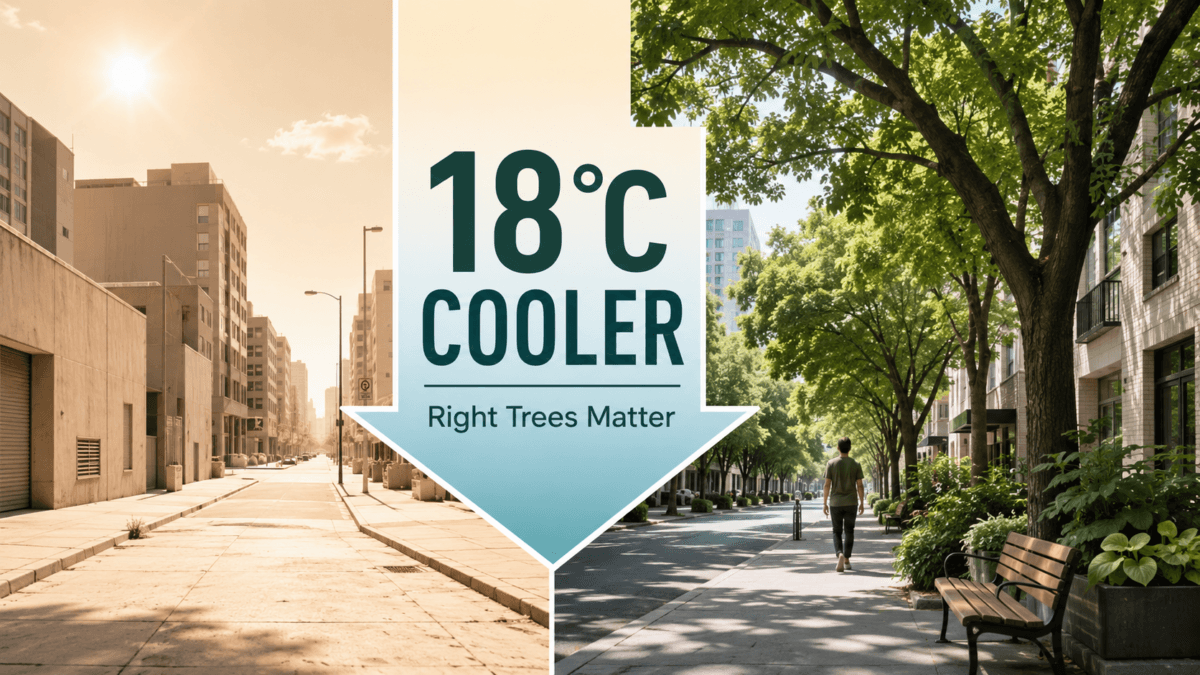
Recent research comparing Melbourne, Munich, and Hong Kong found that street trees in Melbourne reduced radiant heat felt by pedestrians by more than 18°C compared with open streets. The study also found that layered vegetation, where trees are combined with shrubs and ground cover, often works better than trees alone. However, climate, humidity, street width, airflow, and planting density all affect the final result.
Why Cities Become So Hot
The Urban Heat Island Problem
Cities are built with materials that hold heat. Asphalt roads, concrete pavements, dark rooftops, parking lots, and dense buildings absorb solar energy. At night, they release that stored heat back into the air. This creates the “urban heat island” effect, where developed areas are warmer than nearby rural or greener areas. The U.S. Environmental Protection Agency explains that heat islands happen when developed places experience higher temperatures than surrounding areas or when some parts of a city become hotter than others.
This heat is not only uncomfortable. It can affect health, increase electricity demand, worsen air quality, and make outdoor work more dangerous. Heat extremes can raise the risk of heat exhaustion and heatstroke, and they can also worsen heart, kidney, respiratory, mental health, and diabetes-related conditions.
Why Shade Matters So Much
The air temperature shown on a weather app does not tell the full story. People experience heat through sunlight, reflected heat from surfaces, humidity, and wind. A person standing on an open pavement under strong sun may feel much hotter than someone standing under a tree, even if both places have the same air temperature.
This is why trees are powerful. They reduce direct sunlight, cool nearby surfaces, and release moisture through transpiration. The EPA notes that trees, green roofs, and vegetation can reduce heat island effects by shading surfaces, deflecting radiation, and releasing moisture into the air.
The 18°C Cooling Claim: What It Really Means
It Is About Pedestrian Heat, Not the Whole City
The claim that greenery can cool cities by as much as 18°C needs careful explanation. It does not mean the entire city’s air temperature suddenly drops by 18°C. The research found that in Melbourne, street trees reduced the radiant heat absorbed by pedestrians by more than 18°C compared with open streets.
Radiant heat is the heat coming from sunlight and hot surfaces such as roads, walls, and pavements. It strongly affects how hot a person feels outdoors. So the real message is this: the right greenery can make a street feel much cooler and safer for people, even when the air temperature changes only slightly.
Why This Difference Matters
For city residents, “felt heat” is extremely important. A cooler-feeling footpath can encourage walking, cycling, public transport use, outdoor shopping, and social life. It can also protect children, elderly people, delivery workers, street vendors, traffic police, construction workers, and others who spend long hours outside.
A city may not be able to lower its official temperature quickly, but it can reduce people’s heat exposure by redesigning streets and public spaces with shade and vegetation.
Why the Type of Greenery Matters
Trees Alone Are Not Always Enough
Planting trees is valuable, but trees alone may not solve every heat problem. Some streets need layered vegetation. This means combining tall trees, smaller trees, shrubs, grasses, and ground cover. In Munich, the research found that streets and green spaces with trees, shrubs, and ground cover reduced afternoon heat stress by almost 8°C compared with more open spaces.
Layered planting works because each layer plays a role. Trees block strong sunlight. Shrubs reduce heat reflected from walls and low surfaces. Ground cover keeps soil cooler than bare concrete or exposed dry earth. Together, they create a more comfortable microclimate.
Dense Planting Can Sometimes Backfire
More greenery is not always better in every location. In humid cities such as Hong Kong, dense planting can increase humidity and reduce the body’s ability to cool itself through sweat. In narrow streets, thick vegetation can also block airflow. When air movement slows down, heat and pollution may remain trapped near pedestrians.
This does not mean cities should avoid planting. It means planting must be designed intelligently. A hot, dry city may benefit from dense shade and moisture-releasing plants. A humid city may need shade with better ventilation. A wide road may support larger canopy trees, while a narrow lane may need smaller, carefully spaced trees.
What Makes the “Right” Tree or Plant?
A Wide, Healthy Canopy
A good urban cooling tree usually has a broad canopy that can shade roads, footpaths, benches, walls, and building entrances. The canopy should be dense enough to block sunlight but not so thick that it completely stops airflow in tight spaces.
Trees with weak branches, shallow roots, or high water demand may become a problem in harsh urban conditions. The best choice depends on local climate, soil, water availability, and street design.
Native or Climate-Adapted Species
Cities should prefer native or well-adapted species where possible. These trees are more likely to survive local weather, support birds and insects, and require less long-term maintenance. However, “native” alone is not enough. A tree must also suit the exact planting site.
For example, a large tree may be excellent in a park but unsuitable under overhead wires or beside a narrow footpath. A drought-tolerant tree may be better in a water-stressed city than a species that needs constant irrigation.
Enough Soil and Root Space
Many urban trees fail because they are planted in tiny pits surrounded by concrete. Their roots cannot spread, rainwater cannot enter the soil properly, and the tree remains weak. A small, stressed tree gives little shade and may die early.
Successful cooling requires more than planting ceremonies. Cities need proper pits, healthy soil, water access, maintenance, pruning, and protection from construction damage.
Benefits of Smart Urban Greenery
Better Public Health
Cooler streets reduce heat stress. This is especially important as heatwaves become more frequent and intense. Green spaces also encourage walking and outdoor activity when temperatures are manageable.
Lower Energy Demand
Trees that shade buildings can reduce indoor heat. This may lower the need for air conditioning, especially in homes and offices exposed to strong afternoon sun.
Better Air and Water Management
Vegetation can help filter dust, slow stormwater runoff, reduce surface flooding, and improve local biodiversity. A well-designed green street is not only cooler; it can also be healthier and more pleasant.
More Livable Neighborhoods
People are more likely to use shaded streets, parks, playgrounds, and markets. Greenery can make public spaces feel welcoming instead of hostile during hot weather.
Challenges Cities Must Handle
Maintenance Costs
Trees need care. They need watering when young, pruning, pest management, and protection from damage. Poorly maintained trees may become unsafe or die before they provide real cooling.
Unequal Tree Cover
Many cities have more trees in wealthy neighborhoods and fewer trees in low-income areas. A recent global study reported that trees reduce a significant share of urban heating, but the cooling benefit is weaker in many hotter and poorer cities where relief is most needed.
This makes urban greening a fairness issue. The people most exposed to heat often have the least shade.
Wrong Planting Choices
Fast planting without planning can waste money. Trees may be placed where they block visibility, damage pavements, compete with underground pipes, or fail due to poor soil. Good greening needs landscape architects, ecologists, engineers, health experts, and local communities working together.
Practical Tips for Cooler City Design
Plant for Shade Where People Actually Walk
Focus on footpaths, bus stops, school routes, market streets, hospital entrances, public squares, and outdoor work zones. Cooling matters most where people spend time.
Combine Trees With Lower Plants
Where space allows, use trees with shrubs and ground cover instead of isolated trees in bare concrete. This layered structure can improve comfort and biodiversity.
Keep Airflow in Mind
In narrow, humid streets, avoid creating a wall of dense vegetation. Use spacing, pruning, and suitable species to provide shade without blocking wind.
Replace Bare Surfaces
Grass, shrubs, permeable surfaces, and planted beds are usually cooler than bare concrete. Even small changes can reduce surface heat.
Plan for Long-Term Survival
A tree planted today may take years to provide strong shade. Cities should protect mature trees and design new planting so young trees can survive and grow.
Key Takeaways
Greenery can make city streets feel much cooler, but the effect depends on design.
The 18°C figure refers to reduced radiant heat felt by pedestrians, not a citywide air-temperature drop.
Trees provide shade and cooling, but layered vegetation can perform better in many places.
Dense planting can sometimes reduce airflow or increase humidity, especially in humid cities.
The best urban greening plans are local, climate-smart, and focused on human comfort.
Tree planting must include soil, water, maintenance, and long-term protection.
Cooler streets are not only an environmental goal; they are a public health need.
Conclusion
Trees and greenery can be powerful tools against urban heat, but they are not magic decorations. Their success depends on what is planted, where it is planted, and how well it is maintained. A single row of stressed trees in tiny concrete pits will not cool a city in the same way as a healthy, well-designed network of shaded streets, layered parks, green roofs, and planted public spaces.
The most important lesson is that cities should move beyond counting trees. They should measure comfort, shade, airflow, survival, and fairness. The right greenery can turn dangerous hot streets into safer, more livable places. But to get that benefit, urban planting must be treated as serious climate infrastructure, not just beautification.