As India rapidly moves toward clean energy, a new challenge has emerged—rising electricity shortages during nighttime. Recently highlighted in UPSC Current Affairs, this issue reflects a critical challenge facing the country. While solar power is abundantly available during the day, the situation changes dramatically after sunset, raising serious concerns.
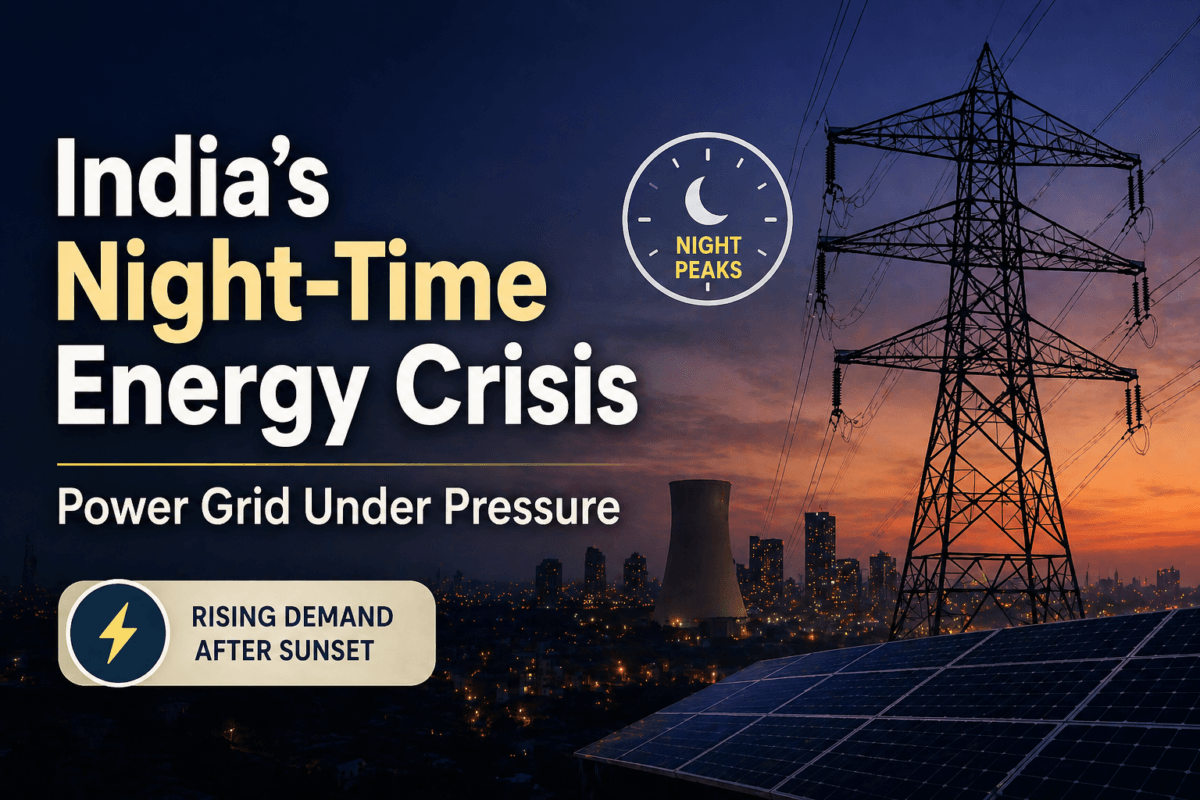
According to Grid India data, the country’s electricity demand reached a record 256 gigawatts on April 25, 2026. However, the most significant aspect of this demand surge was that the problem occurred mainly during nighttime hours. While daytime demand could be fully met due to the availability of solar energy, electricity shortages became evident after sunset when solar generation dropped sharply.
This situation is being referred to as the “Solar Paradox.” India currently has nearly 150 gigawatts of installed solar power capacity, which is a remarkable achievement. However, since this energy source becomes unavailable after evening hours, new challenges arise. This phenomenon is also known as the “Duck Curve” effect—high electricity generation during the day followed by a steep decline after sunset.
To bridge this gap, the country has had to rely heavily on thermal power sources such as coal, gas, and hydroelectric plants. However, extreme heat this year affected these plants as well. High temperatures impacted equipment performance, causing several plants to experience unexpected outages. As a result, the available generation capacity fell significantly below expected levels.
The impact of this problem was also visible in electricity prices. According to Indian Energy Exchange data, power prices dropped to as low as ₹1.5 per unit during daytime hours but surged to nearly ₹10 per unit at night. Such a dramatic fluctuation within a single day clearly highlights the stress on the power market.
Another important factor is that electricity demand increased much earlier than usual this year. Peak demand typically occurs in June or July, but in 2026 it arrived as early as April. The primary reason was the severe heatwave, which left less time for the power system to prepare for the surge.
Several solutions are being proposed to address this challenge. Most importantly, Battery Energy Storage Systems (BESS) can store excess solar energy generated during the day and supply it at night. Other measures include expanding pumped hydro storage, improving demand-side management, and strengthening the transmission network. Upgrading thermal power plants to operate more effectively under extreme heat conditions is also considered essential.
Overall, the 2026 electricity crisis serves as a warning. It is not merely a temporary problem but a significant turning point in India’s energy transition journey. To sustain the success achieved in solar power, advancements in energy storage technologies, infrastructure, and long-term planning must progress at the same pace.
Ultimately, this situation delivers a clear message: generating electricity alone is not enough—ensuring that power is available when it is needed is equally important. That is the true meaning of energy security.