
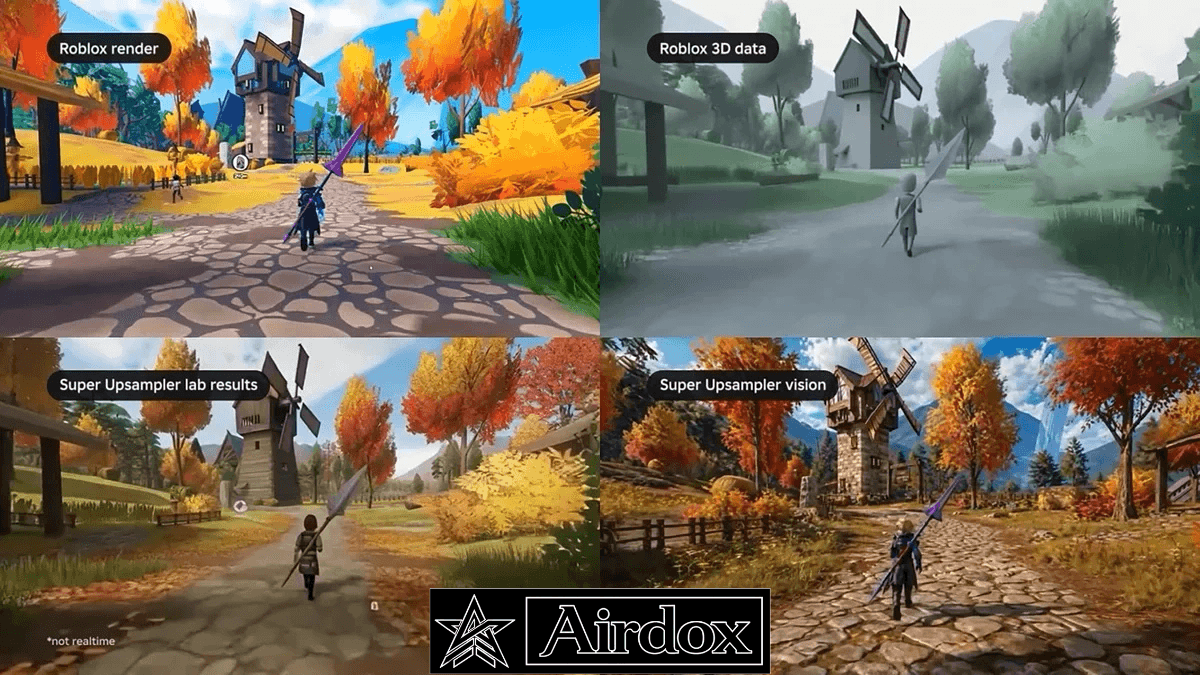
The future of gaming is no longer just about better graphics or faster performance—it is about creating worlds that feel almost indistinguishable from reality. In a major step toward that vision, Roblox has introduced a groundbreaking concept known as “Roblox Reality,” a hybrid architecture designed to bring photorealistic visuals into large-scale multiplayer experiences. This innovation could reshape how games are built, experienced, and shared across the world.
For years, the gaming industry has faced a difficult balance. On one side is realism—the desire to create environments that look and behave like the real world. On the other is accessibility—ensuring that games can run smoothly on everyday devices and be created by developers of all skill levels. Traditionally, achieving high realism required powerful hardware, complex development tools, and massive production budgets. This limited cutting-edge experiences to big studios with significant resources.
Roblox’s new approach attempts to solve this long-standing challenge. Instead of relying solely on a traditional game engine, the platform is combining its existing cloud-based engine with advanced “Video World Models.” In simple terms, the game engine continues to manage the logic of the world—things like movement, physics, and interactions—while the video model enhances how that world looks, adding fine details such as lighting, textures, and dynamic environmental effects.
This hybrid system works like a collaboration between structure and imagination. The engine provides the “rules” and consistency of the game, ensuring that everything behaves correctly across players and sessions. Meanwhile, the video model adds a layer of visual richness—like raindrops forming on surfaces, leaves moving naturally in the wind, or light reflecting realistically off objects. These details, which are extremely difficult to create manually, are generated intelligently, making the world feel alive.
One of the most important aspects of this innovation is scalability. Roblox is known for its massive multiplayer environments, where thousands—or even millions—of users interact in shared spaces. Maintaining consistency across all players while delivering high-quality visuals has always been a technical challenge. By using cloud infrastructure and edge-based processing, Roblox aims to deliver these enhanced visuals efficiently, without requiring users to own high-end devices.
This also opens new doors for creators. Roblox has always been a platform built on user-generated content, where anyone can design and publish their own experiences. With the introduction of this hybrid architecture, creators of all sizes—from beginners to professionals—will be able to build visually stunning worlds without dramatically increasing development costs or complexity. This democratization of high-quality game design could lead to a new wave of creativity across the platform.
At a broader level, this development reflects a larger trend in technology—the blending of artificial intelligence with real-time systems. As AI becomes more capable of generating realistic visuals and environments, it is beginning to complement traditional software rather than replace it. In gaming, this means that the boundaries between pre-designed content and dynamically generated experiences are starting to fade.
The implications extend beyond gaming. Technologies like this could influence virtual reality, digital simulations, education, and even remote collaboration. Imagine virtual classrooms that look and feel real, or training simulations that replicate real-world conditions with incredible accuracy. What begins as a gaming innovation could eventually shape how people interact with digital environments in everyday life.
Of course, the journey is just beginning. Early versions of Roblox Reality are expected to arrive in the near future, and many of its capabilities are still being refined. But even at this stage, it signals a clear direction for the industry—a move toward immersive, intelligent, and accessible digital worlds.
In the end, Roblox’s hybrid architecture is not just about making games look better. It is about redefining what is possible when technology, creativity, and community come together. By lowering the barriers to high-quality creation while raising the ceiling of visual realism, it offers a glimpse into a future where anyone can build a world—and make it feel real.